

They can use German with local people, stand in the places where modern European history was shaped, explore world-class museums, examine design and engineering in action and connect business, science and maths to real places, real systems and real careers.
For busy teachers already balancing curriculum demands, exam pressure, paperwork and the practical realities of taking young people abroad, the right itinerary can make every visit work harder.
A curriculum-linked educational trip to Germany can support subject knowledge, build confidence and create powerful post-trip work that feeds straight back into lessons, revision, coursework and wider learning.
German Language
A German language trip helps students move from "I know this phrase" to "I can use this language". In markets, cafes, museums, stations and shops, they'll hear authentic German (spoken at a natural pace) and practise everyday vocabulary they've learnt in class.
Specialist language lessons can be tailored to their level and your learning objectives, while activities such as market visits and self-led trails encourage spontaneous speaking, listening and problem-solving.
It's a strong fit for GCSE themes including identity and culture, local area, travel and tourism, food and drink, and free time. For A-Level students, it's great for topics including German-speaking society, youth culture, reunification, politics, art, architecture and cultural life.
You can choose to visit bustling cities like Berlin, Munich, Cologne and Hamburg, or go for a more relaxed location like the Rhineland or the Black Forest.
Curriculum Relevance
| A-Level | GCSE | Key Stage 3 |
|
|
|
Key Sites and Activities
- German lessons at specialist language schools - Ideal for groups preparing for exams, lessons at specialist language schools will be tailored to your students' levels and your learning objectives.
- Market visits - The perfect opportunity to get your students talking, a visit to a local market could include a shopping challenge.
- Race for Time activity trail - This self-led activity trail encourages students to engage with their surroundings and practise their language skills with locals.
Learning Outcomes
By the end of the trip, students will be able to:
- Use spoken German in real-life situations
- Students will practise everyday German when ordering food, asking for directions, buying tickets, shopping and speaking to local people.
- Build confidence communicating beyond the classroom
- Students will develop the confidence to use German spontaneously (even when they don't know every word). They'll learn to listen, respond, repair meaning and keep going.
- Improve listening skills through authentic language
- Students will hear German spoken naturally in shops, museums, stations, restaurants and public spaces, helping them tune in to real accents, pace and pronunciation.
- Deepen their understanding of German culture
- Students will explore German customs, daily life, food, traditions and social habits, comparing them with life in the UK.
- Strengthen intercultural awareness
- Students will recognise similarities and differences between German-speaking communities and their own, helping them become more curious, respectful and open-minded learners.
- Develop vocabulary linked to travel, tourism and everyday life
- Students will extend topic vocabulary around transport, food and drink, free time, directions, numbers, money, places in town and cultural visits.
- Connect classroom learning to real places
- Students will see how GCSE themes (identity and culture, local area, travel and tourism, school, future study and work) appear in authentic German settings.
- Gain historical and geographical understanding
- Through visits to cities, landmarks, museums or memorial sites, students will learn more about Germany's history, regional identity and place in modern Europe.
- Develop independence and resilience
- Students will practise problem-solving, timekeeping, teamwork and responsible decision-making while travelling abroad with their peers.
- Create meaningful post-trip work
- Students will gather photos, notes, interviews, menus, tickets and observations to produce presentations, written reports, speaking tasks or display work back at school.
History
Germany gives history students an unforgettable way to examine democracy, dictatorship, conflict, persecution, division and remembrance.
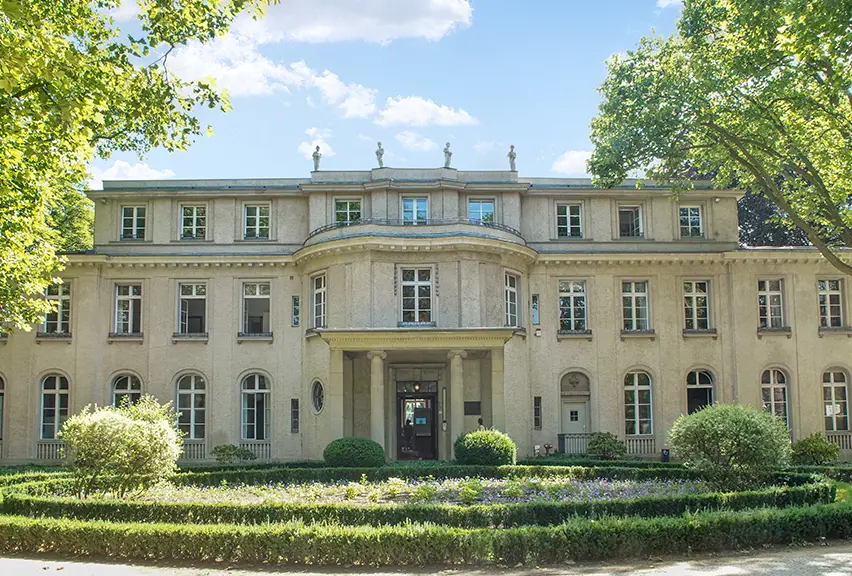
Visits to Berlin and Munich, to sites such as the Topography of Terror, Haus der Wannsee Konferenz, Sachsenhausen or Dachau, the DDR Museum and Hohenschönhausen Stasi Memorial help students connect complex historical events to real places. They can explore the rise of Nazism, life under authoritarian rule, the Holocaust, opposition and conformity, the Cold War, the Berlin Wall and reunification.
These experiences support GCSE and A-Level study by strengthening chronology, source evaluation, historical vocabulary and exam-ready explanation. More importantly, they help students reflect with care on memory, responsibility, democracy and human rights.
Curriculum Relevance
| A-Level | GCSE | Key Stage 3 |
|
|
|
Key Sites and Activities
- Topography of Terror - Find out the role of the SS and Gestapo within the Third Reich and discover the crimes perpetrated by them throughout Nazi-occupied Europe.
- Haus der Wannsee Konferenz - Learn more about the Final Solution in the very place where Nazi leaders decided on its organisation and implementation.
- Sachsenhausen or Dachau Concentration Camp - Discover the realities of the Holocaust and hear personal stories of victims at a concentration camp.
- DDR Museum - This brilliant interactive museum allows your students to explore many different aspects of life in the GDR during the Cold War era.
- Hohenschönhausen Stasi Memorial - Explore this former prison and discover personal stories of political persecution in East Germany.
Learning Outcomes
By the end of the trip, students will be able to:
- Understand the rise and impact of National Socialism
- Students will explore how the Nazi Party gained power, controlled society and used propaganda, terror, ideology and violence to shape life in Germany.
- Deepen understanding of the Holocaust
- Students will examine the persecution and murder of Jewish people and other targeted groups, considering the machinery of genocide, individual experience and the consequences of state-sponsored hatred.
- Connect historical events to real places
- Students will use sites such as Sachsenhausen, Dachau, the Topography of Terror, the Haus der Wannsee Konferenz, the Holocaust Memorial and the Jewish Museum to develop a more grounded understanding of the past.
- Investigate resistance, conformity and opposition
- Students will consider how individuals and groups responded to dictatorship, including examples of resistance, collaboration, fear, silence and survival.
- Explore justice and accountability after the Second World War
- Through visits such as the Nazi Party Rally Grounds and the Memorial Nuremberg Trials, students will examine how Nazi crimes were confronted after 1945 and how ideas about international justice developed.
- Understand the significance of the Cold War in Germany
- Students will investigate the division of Germany and Berlin, exploring the Berlin Wall, the DDR, the Stasi, border controls and the wider conflict between East and West.
- Examine the lived experience of dictatorship
- Students will consider what life was like under authoritarian rule, including surveillance, censorship, propaganda, persecution and the restriction of personal freedoms.
- Develop historical enquiry skills
- Students will use museums, memorials, buildings, artefacts, testimony and landscapes as evidence, asking careful questions about provenance, purpose, perspective and interpretation.
- Analyse cause and consequence
- Students will make links between political decisions, economic pressures, ideology, war, persecution, resistance, division and reunification.
- Strengthen chronological understanding
- Students will place key events in German history within a clear timeline, from the Weimar Republic and Nazi dictatorship to the Holocaust, post-war occupation, Cold War division and reunification.
- Reflect on memory, memorialisation and responsibility
- Students will explore how Germany remembers the crimes and conflicts of the 20th century, considering why remembrance matters and how memorials shape public understanding.
- Build confidence in historical language and explanation
- Students will practise using historical vocabulary, including democracy, dictatorship, antisemitism, propaganda, persecution, genocide, resistance, totalitarianism, occupation, division, communism and reunification.
- Support exam and classroom learning
- Students will gather notes, photographs, reflections and site-specific evidence to support essays, source work, interpret questions, revision tasks and post-trip presentations.
- Develop thoughtful, informed citizenship
- Students will reflect on the importance of democracy, human rights, tolerance and civic responsibility, recognising why history remains urgent and relevant today.
Politics
For politics students, Berlin is a city-sized case study in power, ideology, democracy and division. A trip can help students explore Germany's changing political systems (from dictatorship and division to modern democracy) while considering how institutions are built, tested and protected.
The Berlin Wall Documentation Centre, the DDR Museum, Europa Experience and Hohenschönhausen Stasi Memorial all give students sharp, tangible examples of political control, surveillance, European cooperation and civic participation.
They'll develop a stronger grasp of concepts such as democracy, dictatorship, sovereignty, nationalism, ideology, representation and human rights, while linking past events to contemporary debates around civil liberties, international relations and the role of the EU.
Curriculum Relevance
| A-Level |
|
Key Sites and Activities
- Berlin Wall Documentation Centre - See the "death strip" and hear witness accounts of how the Berlin Wall divided a city and its people.
- DDR Museum - Discover the realities of life in the GDR through interactive exhibits.
- Europa Experience - Explore European politics and take on the role of MEP in the heart of Berlin.
- Hohenschönhausen Stasi Memorial - Learn more about East Germany's system of political oppression.
Learning Outcomes
By the end of the trip, students will be able to:
- Understand Germany's changing political systems
- Students will explore Germany's political development from monarchy to the Weimar Republic, the Third Reich, divided Germany and modern democracy.
- Evaluate the strengths and vulnerabilities of democracy
- Students will consider how democratic institutions are built, tested and protected, using Berlin's political landmarks to reflect on representation, accountability and civic participation.
- Examine the impact of dictatorship on citizens' lives
- Through visits such as Hohenschönhausen Stasi Memorial and the DDR Museum, students will investigate surveillance, censorship, state control and the everyday reality of living under authoritarian rule.
- Explore the political significance of the Cold War
- Students will deepen their understanding of the division of Berlin, the Berlin Wall, the DDR and the wider ideological conflict between East and West.
- Understand the human consequences of political division
- At sites such as the Berlin Wall Memorial and East Side Gallery, students will consider how borders, state power and political ideology affected families, communities and individual freedoms.
- Develop understanding of European institutions
- Through Europa Experience, students will explore the role of the European Parliament, MEPs and Commissioners, linking this to the formation, role and objectives of the EU.
- Analyse the relationship between politics, memory and place
- Students will examine how Berlin uses memorials, museums, architecture and public spaces to remember conflict, dictatorship, division and reunification.
- Strengthen political vocabulary and conceptual understanding
- Students will practise using key terms such as democracy, dictatorship, nationalism, ideology, representation, sovereignty, surveillance, reunification and human rights with confidence and precision.
- Compare political systems and ideologies
- Students will use museums, memorials, guided testimony and historic sites as evidence, questioning perspective, reliability, interpretation and political purpose.
- Connect political history to contemporary issues
- Students will reflect on why Berlin's political past still matters today, especially when considering democracy, civil liberties, European cooperation and international relations.
- Create meaningful post-trip work
- Students will gather notes, photographs, reflections and site-specific evidence to support essays, presentations, debates, revision tasks or independent research back in school.
Art
An art trip to Germany gives students the chance to see how creativity responds to history, culture, politics and place.
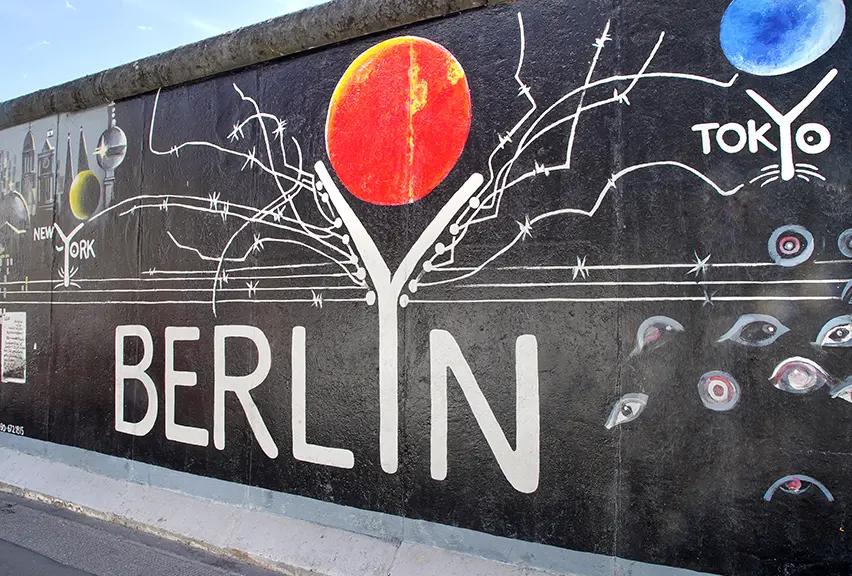
Berlin's art galleries, museums and public spaces support close observation, personal response and contextual understanding, whether students are analysing major collections at the National Gallery, exploring public art at the East Side Gallery or developing practical ideas through a street art workshop.
They'll practise using art vocabulary, forming independent judgements and gathering first-hand research through sketches, photographs, notes and annotations.
For GCSE and A-Level students (especially those building portfolios), Germany offers rich inspiration.
Curriculum Relevance
| A-Level | GCSE | Key Stage 3 |
|
|
|
Key Sites and Activities
- National Gallery (Berlin) - Explore an incredible collection spread across several galleries, including the Hamburgerbahnhof, Alte Nationalgalerie at Museuminsel, and Neue Nationalgalerie and Gemäldgalerie at Kulturforum.
- East Side Gallery - See how artists reacted to the fall of the Berlin Wall and the political changes that were going on in Berlin at the time.
- Street Art Workshop - Find out more about Berlin's street art culture and have a go at creating your own piece.
Learning Outcomes
By the end of this trip, students will be able to:
- Analyse artwork in authentic gallery and urban settings
- Students will develop their ability to observe, describe and interpret artworks first-hand, using appropriate art vocabulary to discuss form, technique, materials, scale, composition and meaning.
- Explore Berlin as a centre of contemporary creativity
- Students will understand how Berlin's history, politics and culture have shaped its artistic identity, from major museum collections to street art and public visual culture.
- Respond personally to museum, gallery and site visits
- Students will record visual information, ideas and reflections through sketches, photography, written notes and annotation, helping them build meaningful primary research for coursework or portfolio development.
- Investigate the relationship between art and society
- Students will consider how artists use imagery, objects, space and public sites to communicate ideas about identity, memory, conflict, freedom and social change.
- Compare historical and contemporary approaches to art
- Students will make connections between works seen in Berlin's museums, galleries and public spaces, recognising continuity and change across different genres, styles, movements and contexts.
- Develop independent judgements about art and design
- Students will practise forming, explaining and justifying their own opinions about artworks, installations, architecture and memorial spaces.
- Understand the power of public art
- Through visits such as the East Side Gallery, students will explore how art can transform shared spaces, express political ideas and invite public dialogue.
- Strengthen contextual understanding
- Students will examine how place, history and culture influence creative work, particularly in a city shaped by division, reunification, remembrance and reinvention.
- Gather inspiration for practical work
- Students will collect visual references, textures, colour palettes, compositional ideas and thematic starting points to inform their own creative responses back in school.
- Build confidence as young artists
- Students will become more curious, critical and confident when engaging with unfamiliar artworks, new environments and different ways of seeing the world.
Design and Technology
Germany is a powerful destination for design and technology because students can see innovation, manufacturing and user-centred design in the real world.
Most groups head to Berlin, where visits such as the Deutsches Technikmuseum, Autostadt and the BMW Motorcycle Plant help students explore materials, production, automation, digital technologies, sustainability and industrial design.
They'll connect classroom theory to professional practice, examining how products are designed, tested and refined for real users. Germany's reputation for engineering precision gives students a strong context for thinking about function, finish, problem-solving and clearer design.
Curriculum Relevance
| A-Level | GCSE |
|
|
Key Sites and Activities
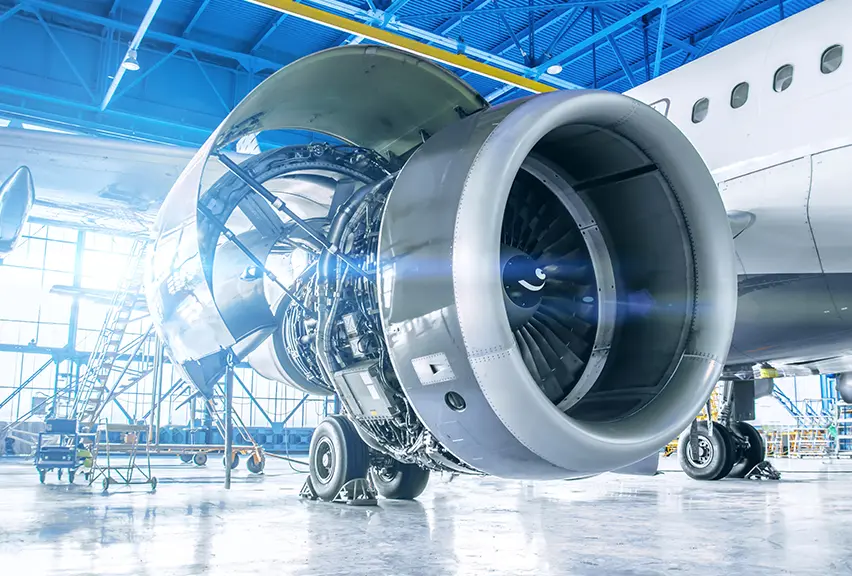
- Deutsches Technikmuseum - Explore the history of industrial technology at this fantastic museum. With exhibition halls dedicated to aviation and maritime technology, there's also a science centre (called Spectrum) to explore.
- Autostadt - Learn more about the world of Volkswagen, from its history to its production and development of commercial vehicles, as well as the other brands within the Volkswagen family.
- BMW Motorcycle Plant - BMW has been manufacturing motorcycles in Berlin since 1969. Find out about both its history and its future on a tour of the plant.
Learning Outcomes
By the end of the trip, students will be able to:
- Understand the role of design in everyday life
- Students will explore how design decisions shape buildings, products, workplaces, transport systems and public spaces in Germany.
- Investigate real manufacturing processes
- Students will observe how products move from initial design concept to finished outcome, using visits such as KPM Welt to understand stages of production, materials, quality control and specialist techniques.
- Explore the properties and uses of materials
- Students will consider how designers and manufacturers select materials for function, finish, durability, aesthetics, cost and sustainability.
- Connect classroom learning to industry practice
- Students will see how design and technology principles are applied in real workplaces, helping them understand the link between school-based projects and professional design, engineering and manufacturing.
- Develop an understanding of German engineering and innovation
- Students will examine Germany's reputation for engineering excellence, exploring how technical knowledge, precision, problem-solving and production methods contribute to successful design outcomes.
- Analyse the impact of technology on design and manufacture
- Students will investigate how new and emerging technologies, automation and digital systems influence the way products are designed, developed and made.
- Evaluate user-centred design
- Students will consider how products, spaces and systems are created to meet user needs, improve experience and solve practical problems.
- Explore sustainability in design
- Students will reflect on resource consumption, material choice, production methods and cleaner design, considering how designers can reduce environmental impact.
- Understand design in a cultural and historical context
- Students will use visits such as the Deutsches Technikmuseum and Berlin's architectural landmarks to examine how design responds to culture, history, society and technological change.
- Develop critical thinking and product analysis skills
- Students will practise observing, questioning and evaluating products, buildings and systems, using appropriate D&T vocabulary to explain design choices and suggest improvements.
- Gather inspiration for future design work
- Students will collect photographs, sketches, notes and observations to support coursework, project development, design research and portfolio work back in school.
- Build confidence as young designers
- Students will become more curious, capable and confident when analysing real-world design problems, processes and solutions.
Science
A science trip to Germany (and Cologne, in particular) helps students apply scientific thinking beyond the lab. From the German Aerospace Center School Lab to Vulkanpark, the Neanderthal Museum and Cologne Zoo, students can explore space science, forces, ecosystems, biodiversity, evolution, Earth science and sustainability in authentic settings.
Hands-on activities strengthen observation, questioning, experimentation and evidence-based thinking, while specialist visits help students see how science supports research, innovation and global problem-solving.
Whether you're teaching primary, Key Stage 3, GCSE or A-Level, Germany can help students connect abstract ideas to memorable experiences (from microgravity and human evolution to conservation and natural processes).
Curriculum Relevance
| A-Level | GCSE | Key Stage 3 | Primary |
|
|
|
|
Key Sites and Activities
- German Aerospace Center (DLR) School Lab - Guided by scientists, your students will explore comets, gravitational biology, muscle physiology and weightlessness at this leading research centre.
- Vulkanpark (Volcano Park) - Discover crater lakes, mineral springs and cold water geysers at this geopark (ideal for inspiring anyone with an interest in Earth science).
- Neanderthal Museum - Explore 7 million years of human evolution on the site where Neanderthal Man was first discovered.
- Cologne Zoo - Come face-to-face with more than 850 species of animals and learn more about the threats they're facing (and the conservation efforts to save them).
Learning Outcomes
By the end of the trip, students will be able to:
- Apply scientific knowledge in real-world settings
- Students will connect classroom science to authentic contexts, seeing how scientific ideas are used in research, technology, museums, habitats and engineering.
- Develop practical investigation skills
- Students will take part in hands-on science activities, building confidence in observation, questioning, experimentation, data-gathering and evidence-based thinking.
- Explore space science and aerospace research
- Students will investigate key ideas linked to microgravity, comet simulation, gravitational biology and space technology, helping them understand how scientists study conditions beyond Earth.
- Understand the role of scientists in solving global challenges
- Through activities such as solar water purification, students will understand how science supports innovation, sustainability and practical problem-solving.
- Strengthen understanding of forces and motion
- Students will explore physics in action at Phantasialand, using rollercoasters and theme park rides to consider speed, acceleration, gravity, energy transfer and forces.
- Deepen knowledge of evolution and human development
- Students will use the Neanderthal Museum to explore human origins, inheritance, variation, adaptation and evidence for evolution.
- Investigate ecosystems and biodiversity
- Students will examine living things, habitats and environmental relationships through visits such as the Aquazoo-Löbbecke Museum, developing their understanding of classification, adaptation and conservation.
- Explore Earth science and natural processes
- Students will consider geological activity, Earth systems and environmental change, with opportunities to link learning to landscapes such as the Vulkanpark.
- Build confidence using scientific vocabulary
- Students will practise explaining scientific ideas clearly and accurately, using subject-specific language across biology, chemistry, physics and Earth science.
- Develop curiosity, collaboration and critical thinking
- Students will work together to ask questions, solve problems, interpret information and reflect on what evidence can tell us.
- Connect studies to future pathways
- Students will gain insight into scientific careers, research environments and STEM industries, helping them see how science can shape their future study and work.
- Create meaningful post-trip work
- Students will collect observations, notes, sketches, photographs and reflections to support follow-up tasks, presentations, revision activities or project work back in school.
Business Studies
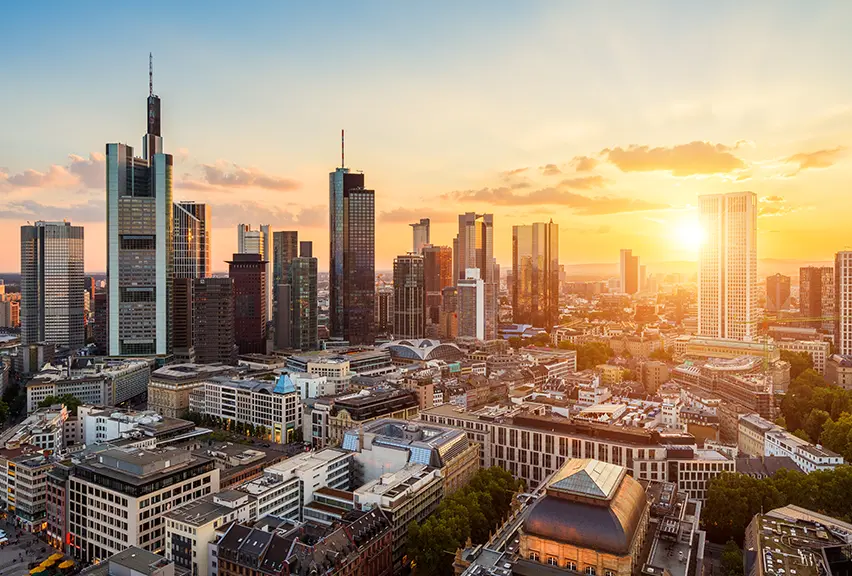
Germany's economic hub, Frankfurt, gives business studies students a direct view of finance, markets, operations and global commerce.
Visits to the European Central Bank, Money Museum of the Deutsche Bundesbank, Frankfurt Stock Exchange and Frankfurt Airport can help students understand monetary policy, financial stability, investment, risk, logistics, location and the wider business environment.
They'll see how organisations operate at scale, how external influences shape strategy and how global markets affect businesses, consumers and economies. This is especially valuable for linking GCSE and A-Level theory to real business environments, giving students stronger examples for case studies, exam answers, presentations and post-trip analysis.
Curriculum Relevance
| A-Level | GCSE |
|
|
Key Sites and Activities
- European Central Bank - The visitor centre for the European Central Bank helps students understand the bank's role and responsibilities within the EU and the economy of the Eurozone.
- Money Museum of the Deutsche Bundesbank - Discover everything you ever wanted to know about money at this brilliant museum. Touch a real gold bar and see what happens when inflation goes through the roof.
- Stock Exchange - See the trading floor, find out how stock exchanges actually work and discover how technology is used with a visit to Frankfurt's Stock Exchange.
- Tour of Frankfurt Airport - See behind-the-scenes of a busy commercial airport with this guided tour.
Learning Outcomes
By the end of the trip, students will be able to:
- Understand Frankfurt's (and Germany's) role in the European economy
- Students will explore why Frankfurt is a major financial centre, considering the importance of banks, stock exchanges and financial institutions in Germany and the wider Eurozone.
- Explain the function of financial markets
- Through visits such as the German Stock Exchange, students will develop their understanding of shares, trading, investment, risk, market confidence and the role of financial markets in business growth.
- Investigate monetary policy and financial stability
- Students will use the European Central Bank visit to explore how monetary policy, banking supervision, payment systems and the euro affect businesses, consumers and economies.
- Connect classroom theory to real business environments
- Students will see how business concepts operate beyond the textbook, linking visits to topics such as business aims, organisational structure, external influences, finance and economic change.
- Analyse the impact of location on business success
- Students will consider why businesses choose to operate in Frankfurt, examining access to transport, skilled labour, financial services, infrastructure, customers and international markets.
- Explore operations and logistics in action
- Through the Frankfurt Airport tour, students will investigate how a major transport hub manages people, services, systems, resources and processes at scale.
- Evaluate the influence of globalisation
- Students will consider how international trade, global markets and cross-border decision-making affect businesses operating in Germany, Europe and beyond.
- Understand how businesses respond to external influences
- Students will explore how economic, technological, environmental and ethical factors influence business strategy, decision-making and long-term planning.
- Develop financial and commercial literacy
- Students will build confidence using business vocabulary linked to finance, investment, production, markets, customers, operations, branding and economic performance.
- Investigate branding, customer experience and service delivery
- Students will consider how businesses and destinations present themselves to customers, from Frankfurt's skyline and transport systems to visitor attractions and cultural sites.
- Strengthen analytical and evaluative skills
- Students will practise observing real organisations, asking sharp questions and making reasoned judgements about business activity, strategy and impact.
- Create meaningful post-trip work
- Students will gather notes, photographs, data and observations to support case studies, presentations, exam preparation, or coursework-style analysis back in school.
Maths
A maths trip to Germany helps students see numbers doing real work. In Frankfurt, a visit to the Money Museum of the Deutsche Bundesbank, the Stock Exchange and Experiminta Science Center can show how mathematical thinking shapes finance, data, risk, value, measurement, probability and problem-solving.
Students can explore maths in business and economics, apply logic through hands-on STEM activities, and observe geometry, scale, proportion and structure in the built environment. It's a brilliant way to help students understand that maths isn't confined to exercise books. It's in money, movement, markets, machines and the modern world.
Curriculum Relevance
| All Levels |
|
Key Sites and Activities
- Money Museum of the Deutsche Bundesbank - if you want to inspire your students to see the value of maths in the "real world", a visit to this brilliant museum all about money is hard to beat.
- Frankfurt Stock Exchange - Continuing the finance and economy theme, a visit to Frankfurt's stock exchange (where you can see the trading floor in action) is a must.
- Experiminta Science Center - With hands-on experiments that bring STEM to life, the Experiminta Science Center will spark your students' curiosity.
Learning Outcomes
By the end of the trip, students will be able to:
- Recognise maths as a real-world problem-solving tool
- Students will explore how mathematical thinking is used beyond the classroom, particularly in finance, science, technology, transport, architecture and everyday decision-making.
- Understand the role of maths in business and finance
- Through visits such as the Money Museum of the Deutsche Bundesbank and the German Stock Exchange, students will investigate how numbers, data, exchange, value, risk, and calculation shape financial systems.
- Explore money, monetary policy and economic data
- Students will develop their understanding of cash, book money, price stability and financial decision-making, linking mathematical ideas to the way economies operate.
- Interpret data in authentic contexts
- Students will practise reading, questioning and interpreting numerical information, considering how data is used by banks, stock exchanges, businesses and consumers.
- Apply mathematical thinking through hands-on STEM activities
- At Experiminta Science Center, students will use logic, measurement, pattern-spotting and problem-solving to explore mathematical and scientific concepts in an interactive setting.
- Develop spatial awareness and estimation skills
- Students will use Frankfurt's skyline, transport systems and observation points (such as the Main Tower) to think about scale, height, distance, proportion, perspective and urban design.
- Make connections between maths and careers
- Students will discover how mathematical skills support careers in finance, economics, engineering, architecture, technology, science and support.
- Explore the history and development of number systems
- Students will consider how ideas about money, measurement, value and calculation have developed over time, helping them see maths as a human story, as well as a technical subject.
- Strengthen mathematical communication
- Students will practise explaining mathematical ideas clearly, using appropriate vocabulary when discussing finance, data, measurement, probability, risk and problem-solving.
- Build confidence with unfamiliar problems
- Students will tackle new contexts, ask questions and use reasoning to make sense of information (the kind of resilience they need in exams).
- Develop curiosity about maths in the built environment
- Students will observe how geometry, structure, symmetry, scale and proportion appear in Frankfurt's architecture and public spaces.
- Create meaningful post-trip work
- Students will collect notes, calculations, observations, photographs and data to support follow-up tasks, presentations, investigations or revision activities back in school.
In Summary...
Every school group is different. Your students, schemes of workm exam boards, confidence levels and learning priorities all matter. That's why the best educational trips to Germany are built around your specific objectives (not pulled from a shelf and handed over as "one size fits all").
Tell us what you want your students to understand, practise, question, remember or create, and we'll help shape an itinerary that supports your curriculum and works for your group.
We're here to guide, support and deal with the details, so you can focus on the learning.
Get your quote today and let's build a trip that brings your subject to life.


