

Science trips don’t just bring the subject to life for students; they help them see the wonder in science. They give them practical experience of tricky concepts. And they even allow them to see how science could offer them an exciting, world-changing future.
But choosing where to go can be difficult. To help, we’ve taken a look at some of the best science-focused activities around the world for Key Stage 3, GCSE and A-Level students.
Hopefully, this will help spur some ideas. And when you're ready, take a look at our full range of science school trips.
The Best Trips for Key Stage 3 Science
| Visit | Location | What topics are supported from the KS3 science curriculum? |
| Eden Project | Cornwall, UK |
|
| Corpus Museum | Netherlands |
|
| Disney Youth Education Series | Florida, USA |
|
The Eden Project, Cornwall, UK
If your KS3 students are learning about photosynthesis, plant reproduction or ecosystems, then a trip to the Eden Project down in Cornwall really is pretty hard to beat.
Built on a former clay mine, there are now two massive biomes to explore. The Rainforest Biome is home to plants from all over the tropics. You’ll see some really exotic specimens here, from wild bananas, sugar cane and oil palm to the very cool (but also very weird) titan arum. You’ll need to be extremely lucky (or unlucky) to see it in bloom, as it only flowers for 48 hours (and when it does, it attracts pollinators by giving off the foul smell of rotting flesh).
Slightly more pleasant for the nose, the Mediterranean Biome is home to grape vines, olives and chilli peppers, as well as aloe, citron (not lemon) and cotton, as well as many more plants from the Mediterranean, South Africa, California and Western Australia.
Exploring these incredible biomes will give your students the chance to see the importance (and magic) of biodiversity. They’ll also have the opportunity to see the diversity of plant life, as they explore how different adaptations have allowed each plant species to survive and reproduce in their native environments.
There’s a permanent exhibition too that explores the importance of the world that we cannot see, and how those ‘invisible’ lifeforms and systems are vital to life on Earth.
And, really excitingly for school groups, the Eden Project also offer educational workshops. For KS3 in particular, the Photosynthesis – Life Support workshop will be of interest. Students will use their knowledge of photosynthesis and respiration to solve problems.
Alternatively, the Going to Extremes workshop takes a closer look at some of the weird and wonderful adaptations of some of the rainforest plant species. And there are also workshops on the climate emergency and biodiversity (as well as some great workshops for older students if you’re wondering about opening up the trip to other year groups).
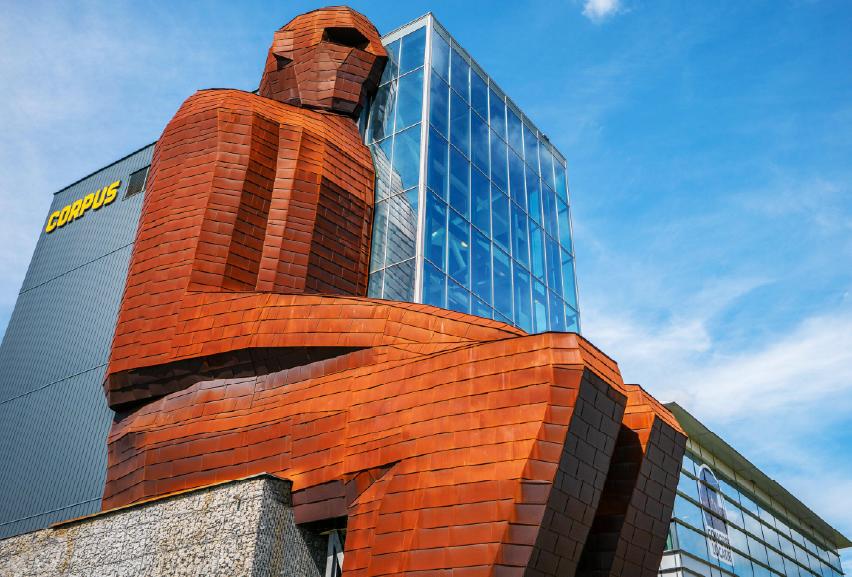
The Corpus Museum, Netherlands
Ever been in the middle of a lesson on the human body and thought, 'this would be so much easier to explain if we could all shrink down to the size of a cell and see these systems and processes in action?'
OK, probably not. But you can actually do exactly that in the Netherlands.
The Corpus Museum takes you on a journey through the human journey. You’ll enter through the knee, before journeying up through the intestines, into the womb and the lungs, before reaching the mouth and the brain. As you journey through, you’ll hear the sounds of the body and see films explaining how it all works.
And once you’ve made your way through the body (which typically takes about 55 minutes), your students can reinforce what they’ve learnt in the interactive area. Here, they can enjoy hands-on experiments and use their knowledge to answer questions.
So, when you get back to the classroom, your students can build on their incredible experience of the digestive and reproductive systems. They’ll remember what smoking does to the lungs. And they’ll understand exactly how red blood cells make their way around the body.
And who knows, you may even have inspired the doctors, nurses and biomedical researchers of the future, all with one well-selected experience.
Disney Youth Education Series, Orlando, USA
Bring the magic of physics to life with the Disney Youth Education Series available at Disney parks in Florida.
In the Physics of Disney Parks workshop, your students will step into the shoes of Disney’s Imagineers (the very clever folk who create the incredible rides the theme parks are known for).
Using the rides and rollercoasters for context, your students will delve deeper into principles including Newton’s laws of motion, gravity, potential and kinetic energy through hands-on experiments. They’ll learn how to define speed, velocity, acceleration, inertia, force and friction.
Then, they’ll put that knowledge to the test as they work through creative problem-solving tasks and try to work out how some of the attractions work. And, excitingly, they’ll have the opportunity to work together to design their own attractions, using everything they’ve learnt.
If you’re looking for an experience that’s going to get students excited about physics, this is going to be pretty hard to beat.
The Best Trips for GCSE Science
| Visits | Location | What topics are supported from the GCSE science curriculum? |
| Cité des Sciences et de l'Industrie | Paris, France |
|
| Space Center U | Houston, USA |
|
| German Aerospace Center | Cologne, Germany |
|
Cité des Sciences et de l'Industrie, Paris, France
This interactive museum is a must-see for GCSE students.
It’s Europe’s largest science museum and welcomes around five million visitors per year. The museum is located in the Parc de la Villette, Paris’ third-largest park.
The park itself is worth a visit too – as well as being home to the Cité des Sciences et de l’Industrie, it also boasts three major music venues and the prestigious Conservatoire de Paris.
The science museum project was the innovation of then-French President Valéry Giscard d’Estaing, who wanted to promote public interest in science, research and industry, particularly among young people.
Constructed around the steel trusses of a former abattoir, the museum was eventually opened by François Mitterand in March 1986.
The museum boasts a planetarium, a 1950s submarine and an Omnimax theatre housed within a geodesic dome known as La Géode.
Permanent exhibitions focus on the brain, light, energy, maths, transport, genes, science in the media and much, much more.
In the Sounds exhibition, your students will test their hearing and learn more about the voice, the ear and the physics of sound. Hands-on experiments will show them how long it takes for sound to travel, and that sound cannot travel in the absence of matter.
The Mathematics exhibition is divided into two sections, covering geometry, numbers and movement, and complexity and prediction. Here, your students can test Pythagoras’ theorem for themselves, take the inertia carousel for a spin, and learn more about probability and statistics within scientific fields.
In the Space Mission exhibit, they’ll step into the shoes of an astronaut to explore research and technologies helping us to understand the universe.
And the Climate Emergency exhibit will take your students through the various tactics being used to decarbonise our societies and, essentially, save our planet.
The museum also boasts an exciting programme of temporary exhibitions.
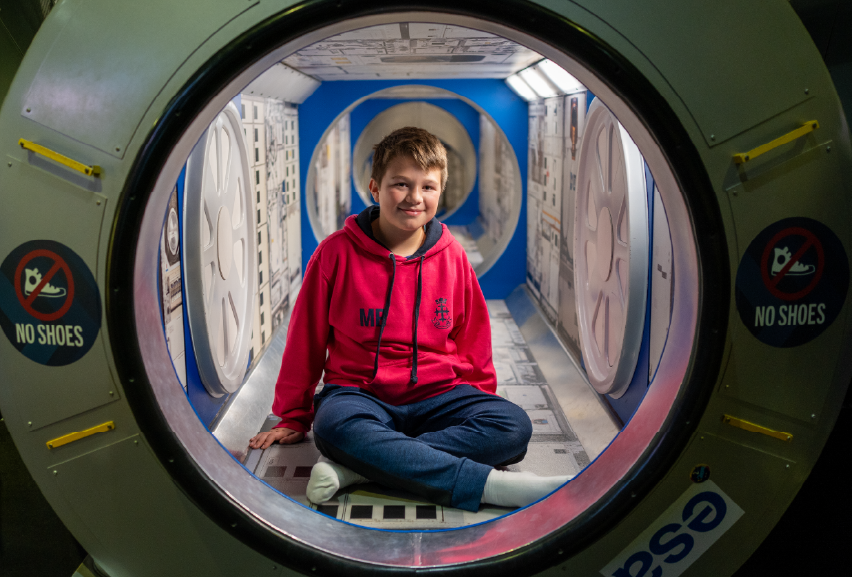
Space Center U, Houston, USA
If you’re looking for a once-in-a-lifetime experience that’ll inspire your students to see the wonder in science (and maybe even steer a few of them towards a career in the field), then you need to head to Houston.
Here, at Space Center U, your students will be immersed in the world of NASA scientists, engineers and astronauts for five whole days of hands-on activities.
You can choose from three missions (Martian Expedition, Destination ISS or AERIS: (Atmospheric Exploration & Research in Science)). Whichever mission you choose, your week will be filled with hands-on engineering activities using real-world data, behind-the-scenes tours of NASA’s facilities, project-based learning inspired by current space exploration, as well as fascinating insights on what it’s really like to work at NASA, delivered by NASA experts and astronauts.
Your students will have the chance to build and launch their own rockets, explore how to create habitats that will allow humans to survive in space (including how to provide clean water and breathable air, and how to protect them from temperatures that can reach as low as -196°C).
They’ll design and build their own rovers to collect rock samples from Mars and get stuck into some astronaut training simulations. They’ll work together as a team, taking on the roles of astronauts, Mission Control and scientific backroom support to tackle real scenarios all designed to further develop their understanding of physics and engineering.
It’ll be a jam-packed week in Houston, but make sure you don’t miss out on the chance to wander through the Starship Gallery, where you’ll find some of the most incredible spacecraft that demonstrate the history of mankind’s exploration of outer space (and watch your students’ minds be blown when they get to handle real Moon rocks).
If the trip budget won’t stretch to the US, a similar experience is also offered by the Euro Space Center in Belgium.
German Aerospace Center, Cologne, Germany
Are your GCSE students learning about satellites and orbits? Are you hoping to encourage them to take science further (not just to A Level and university, but even into their careers)?
In Cologne, you can include a visit to the German Aerospace Center. This is the headquarters for Germany’s aerospace, energy and transportation research. One of the largest and most modern research facilities in Europe, school groups are invited in to enjoy hands-on workshops designed to get pupils excited about aerospace, transport and energy.
Your students will be able to explore some truly fascinating topics, including gravitational biology, comet simulation and how weightlessness affects muscle physiology.
They’ll be able to investigate what the latest images from Mars show us, and whether there could be water there (or even simple lifeforms). They’ll find out what satellites can tell us about what’s going on Earth, and they’ll discover the work that robots are doing in space.
Using sophisticated equipment you won’t find in any school and guided by top scientists and natural science or engineering, your students will get stuck into some exciting hands-on experiments that will leave them feeling inspired.
They’ll find out what a typical day looks like for those working at the forefront of research in science, aerospace and engineering, and they’ll find out how that research impacts their everyday lives.
The Best Trips for A-Level Science
| Visit | Location | What topics are supported from the A-Level science curriculum? |
| Braunton Burrows | North Devon, UK |
|
| CERN | Geneva, Switzerland |
|
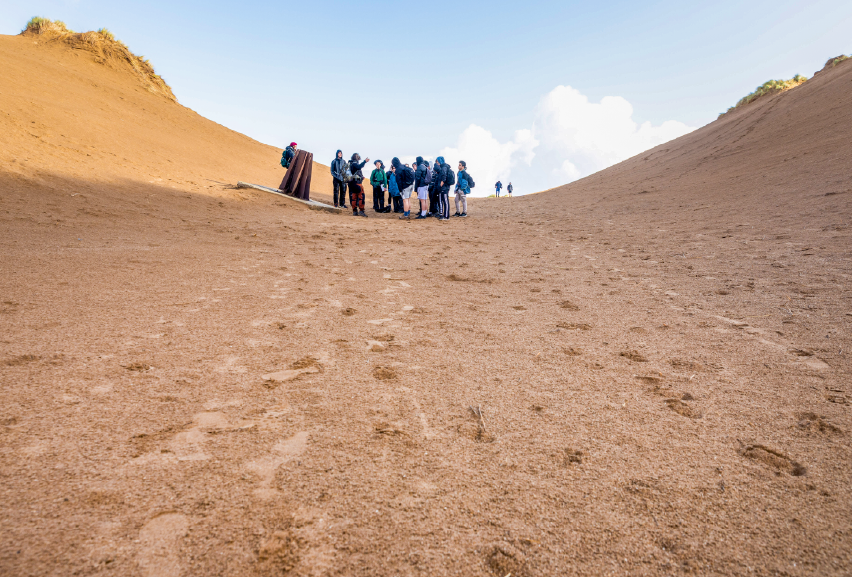
Braunton Burrows, North Devon, UK
By basing your group at Skern Adventure in North Devon, you’ll find the Braunton Burrows UNESCO Biosphere Reserve right on your doorstep.
This is the second-largest dune system in the UK and is a hugely important Site of Special Scientific Interest (SSSI) thanks to its ecological importance. This is the perfect spot for exploring dune and marine ecosystems, as well as habitat diversity, species richness and biodiversity conservation.
You’ll also be able to explore how climate change and disease have affected the landscape and find out about some of the novel land management and conservation strategies being employed here.
Braunton Burrows consists of dunes and slacks. Many of the slacks are below the water table and were traditionally wetland areas (attracting many wetland birds). Climate change has caused many of these to dry out considerably.
As well as the drying out of the wetland areas, Braunton Burrows was so named because of the abundance of rabbits that once lived here. Myxomatosis has decimated the rabbit population, and this has meant that cattle have had to be introduced to graze the area, keeping the scrub low to allow some of the other plant species to thrive.
But it’s not just up to the cattle to help manage the land. The Ministry of Defence have also been invited in to train with their off-road vehicles. These also help keep the scrub at bay and turn over the soil to allow wildflowers to grow. And in the summer months, this effort really pays off, as the area is blanketed in colour from 470 species of (mostly rare) plants and flowers.
CERN, Geneva, Switzerland
CERN is home to the largest particle physics lab in the world (and is also famously home to the Large Hadron Collider, the world’s largest and highest-energy particle collider). And the Science Gateway (the educational centre) brings to life not just the work that’s going on at CERN, but also the world of particles themselves, making this the perfect activity for A Level physicists.
There are immersive multimedia exhibits, hands-on workshops and science shows to enjoy.
There are three permanent exhibitions to explore. The first gives your students the chance to find out more about CERN itself. They’ll find out what the Large Hadron Collider is being used for and some of the incredible technology that makes its work possible. And they’ll find out how this technology is being used in hospitals. There are several hands-on opportunities here too, from playing a game of proton football to designing their own experiment to detect particles.
The second exhibition will take your group back to the beginning of time, to discover how the universe has evolved. Your students will be able to have a go at a few experiments to learn more about how the scientists at CERN work.
And the third permanent exhibition will take you into the quantum world, where you can have a go at quantum karaoke and play quantum tennis. Here, your students will find out how quantum physics helps to explain the world around us.
As well as all the super cool physics going on at CERN, a visit here will also show students how incredible a career in science could be.
One really key thing to mention is that we cannot book CERN for you. You’ll need to book your visit directly with them (you can book exhibitions, guided tours and lab workshops in advance; other activities may also be available on the day you visit), using a school-registered email address. However, we can then arrange the rest of your trip (including travel, accommodation and other activities) around your CERN booking. The great news is, it’s free for school groups to visit.
However, as you can imagine, places get booked up very quickly, so we do recommend that you get your booking in as early as possible to avoid disappointment. For more information or to book your visit, please see CERN’s website.
Feeling inspired?
We hope we’ve helped inspire a few science trip ideas with this post. If you’ve spotted an activity that sparks your interest and you’d like to know more about how it could work for your group, please just get in touch with us (we love chatting to teachers to help them turn their trip idea into trip reality).
Alternatively, if you're looking for more inspiration, why not check out our ideas for a STEM school trip


Tours Sales & Product Manager


