

And we can’t say we’re surprised that so many of our groups choose Italian ski resort. For years, they've consistently offered incredible value and a fantastic range of student-friendly facilities.
Why Choose Italy for a School Ski Trip?
- High standard of accommodation
- Quieter ski slopes
- Incredible food
- Warm welcome
- Fantastic value for money
- Spectacular scenery
High standard of accommodation
In our experience, Italy’s school-friendly hotels are of a much higher standard than those in other countries. They usually boast excellent facilities, and many also allow for doorstep skiing (which often commands a premium elsewhere).
Quieter ski slopes
Italians tend to view skiing as a weekend activity. This means that during the week, the Italian slopes are very quiet indeed. Not only does this mean your students will spend more time skiing and less time queueing, but they’ll also be more relaxed and less intimidated than in a busier resort.
Plus, there are loads of hidden gems to explore, where the slopes are even quieter.
Incredible food
Your students will already have some experience with Italian cuisine, and many of the dishes will be familiar to them. Let’s face it, kids love pizza, pasta and ice cream, so you know even the pickiest of eaters are going to find something to eat. Plus, hot lunches often come as standard in Italy. This is important for ensuring your students are properly fuelled for their afternoon skiing sessions.
Warm welcome
You’ll never receive a warmer welcome than the one you receive in Italy. In fact, by the end of the week, you may very well feel like a local, or even part of the family. Many of our groups fall in love with resorts thanks to the kindness of the locals they meet there, and often return year-on-year for that very reason.
Fantastic value for money
Italy offers fantastic value for money – not only for the initial package but in the resort too. Snacks and drinks only cost a few euros, which means that your students’ pocket money will stretch further here (an important consideration when trying to ensure the trip is accessible to as many students as possible).
Spectacular scenery
From Mont Blanc and the Matterhorn in the Alps to the spectacular pink granite of the Dolomites, Italy offers spectacular scenery which is certain to make a big impression on your students.
The Best Ski Resorts in Italy for School Groups
| Resort | Total piste | Top piste altitude | Piste difficulty level | Vertical drop | No. of lifts | Snow-making coverage | Snow park | Transfer time from airport |
| Sestriere | 400km | 2823m |
|
1473m | 88 | 50% | Yes | 2 hours from Turin |
| Bardonecchia | 100km | 2800m |
|
1500m | 23 | 50% | Yes | 1 hour from Turin |
| Pila | 70km | 2725m |
|
925m | 15 | 80% | Yes | 1.5 hours from Turin |
| Aprica | 50km | 2361m |
|
1180m | 23 | 95% | Yes | 2 hours from Milan (Bergamo) |
| Sansicario | 400km | 2823m |
|
1473m | 88 | 50% | No | 2 hours from Turin |
| Passo Tonale | 100km | 3069m |
|
1800m | 30 | 100% | No | 2.5 hours from Milan (Bergamo) |
| San Martino di Castrozza | 60km | 2357m |
|
700m | 21 | 95% | No | 3 hours from Venice |
| Cimone | 60km | 2165m |
|
956m | 21 | 80% | Yes | 2 hours from Pisa |
Sestriere
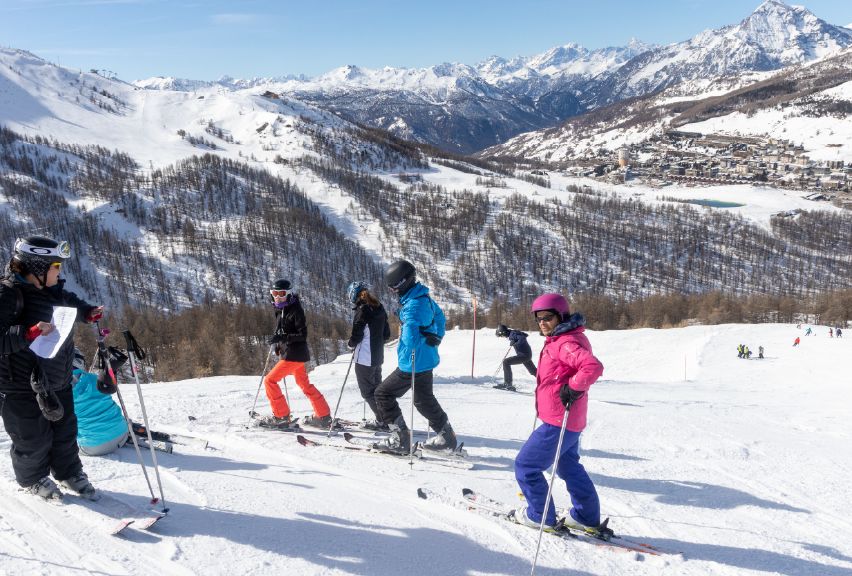
Choosing to ski in Sestriere will give you access to the Milky Way (Via Lattea in Italian), a huge area that offers 400km of skiing across Italy and France. The highest altitude resort in the area, and with north-west-facing slopes, Sestriere is famous for its excellent snow conditions (and has extensive snowmaking capabilities too).
Skiing in Sestriere
The skiing in Sestriere is so highly regarded that it regularly hosts international skiing events. In fact, it was an Olympic Village during the 2006 Winter Olympics and also hosted the alpine skiing events.
If you have any advanced skiers in your group, they could even have a go on the famous Kandahar (the men’s downhill Olympic run).
For beginners, runs start in the centre of the resort, right next to the ski school meeting point. The blue slopes are nice and wide, and the instructors are all really helpful too, with most speaking good English. In fact, in our experience, all the resort staff are incredibly friendly and approachable.
Intermediates can look forward to some great skiing too, and, of course, you’ll enjoy great connections to the other resorts in the Milky Way – including Claviere, Sansicario, Sauze d’Oulx and Montgenevre.
And for snowboarders, there’s a fantastic snow park too.
Staying in Sestriere
Sestriere was the first purpose-built resort in the Italian Alps. It was created in the 1930s by Giovanni Agnelli (founder of FIAT), who wanted to create a holiday resort for the workers in his factory. The two hotel towers (which are now a symbol of the resort) were built at this time.
If you’re looking for alpine charm, Sestriere probably isn’t the resort for you. However, the facilities, amenities and snow surety make this a great choice.
There are plenty of shops and restaurants to explore. And its high altitude (teamed with its extensive snow-making capabilities) means it’s a sure-fire bet for snow.
Our groups normally stay in the nearby hamlet of Pragelato, where there’s a gondola that will take you straight up the slopes of Sestriere. And Pragelato itself had a starring role in the 2006 Winter Olympics (the cross-country skiing and ski jumping were held here).
The Villaggio Olimpico is ideally located next to two chairlifts offering access to different parts of Sestriere’s slopes.
Sestriere offers doorstep skiing and plenty of après-ski activities within walking distance.
Bardonecchia
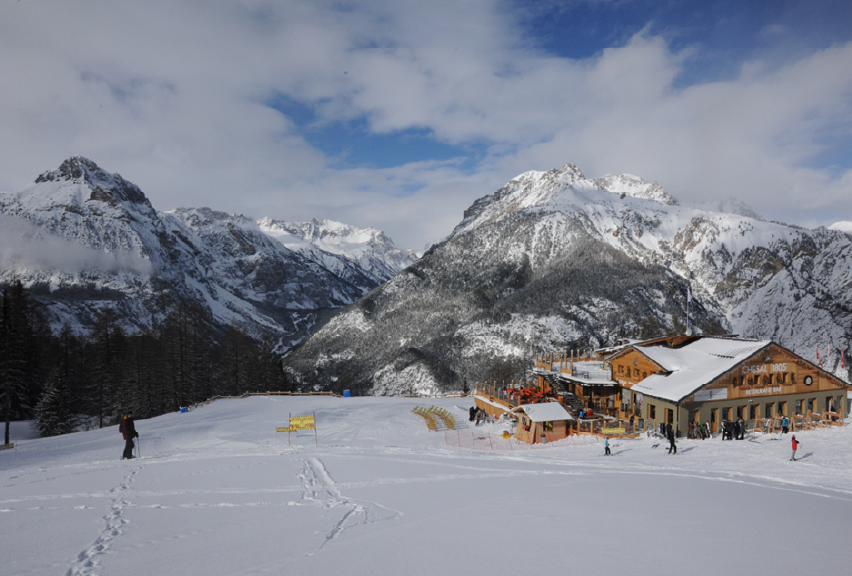
Just an hour's drive from Turin, in beautiful Piedmont and close to the border with France, this traditional Italian mountain village is less known than the resorts of the nearby Milky Way ski area, making it much quieter, with almost non-existent lift queues.
Skiing in Bardonecchia
Groups who choose to ski at Bardonecchia will find a resort that boasts 110km of well-groomed, skiable pistes (35 of which are equipped with snow cannons), as well as 21 lifts that can carry up to 30,000 people per hour.
The resort is best for beginners and intermediates and offers good progression from the beginner slopes to the intermediates. In fact, one of the best things about Bardonecchia is that you'll return home from your school ski trip knowing that your students will have skied as much of the mountains as they're capable of.
There are three main areas. Colomion - Les Arnauds and Melezet are well connected and offer skiers some exciting, wide runs that wind their way through the trees. The third skiing area, named Jaffreau, is just 5 minutes from the resort centre. Here, you'll mostly find open runs that offer dramatic panoramic views across the mountains that surround the area.
If you have any snowboarders in your party, they'll love Bardonecchia's superb snow park, which is in the Melezet area. The park consists of several zones, all named after animals and designed to suit every level of snowboarder.
Whether you're young snowboarders are into jibbing or freestyle, there'll be something for them at this fantastic park (including the Olympic half-pipe, which is still in situ and dominates the surrounding landscape). The freestyle runs are all lined with trees to replicate the North American experience. There's also an area for complete beginners.
Bardonecchia boasts a fantastic snow record, thanks to its high altitude and predominantly north-facing slopes. If you're planning an Easter ski trip for your school and want a quiet location where students can ski safely, this could be the resort for you.
Overall, we think Bardonecchia is still hugely underrated. During the week, you'll find the slopes almost deserted (it does get busier at the weekend, with mainly visitors from Turin heading up to the slopes).
This means your students will spend more time skiing and less time waiting in queues for the lifts. And you'll find that the après-ski scene is less rowdy than other resorts for this same reason.
Staying in Bardonecchia
Bardonecchia itself has a long history as a much-loved resort, while remaining under the radar of many British tourists. The resort played host to the very first Italian skiing championships here in 1909 and hosted the snowboarding events during the 2006 Winter Olympics in Turin.
One of our most popular accommodation options in the area is, in fact, the same hotel in which the athletes stayed during the 2006 Winter Olympics and is just 250m from the lifts (making it incredibly convenient).
However, the town predates winter sports and isn't purpose-built, which has allowed it to retain its traditional character. It's also a year-round resort, thanks to the exciting summer activities available in the area, so the leisure facilities are excellent and, indeed, above the standard for a resort of this size.
The Romans built a road here to link Italy to France, and this became known as the Via Francigena during the medieval period. An important route for pilgrims on their way to Rome, the landscape is dotted with beautiful abbeys and churches. Thanks to this ancient road, the area retains good transport links, making it very easy to reach.
There are plenty of fantastic restaurants around for when hunger strikes, and the après-ski options are excellent for schools, with activities including snowboarding, ice skating, swimming, and snowshoeing (ciaspole in the Piedmontese dialect) all possible here.
As an end-of-week treat, you could even challenge your students to race each other - at Plan del Sole, there's a racing piste with an automated timer.
Pila
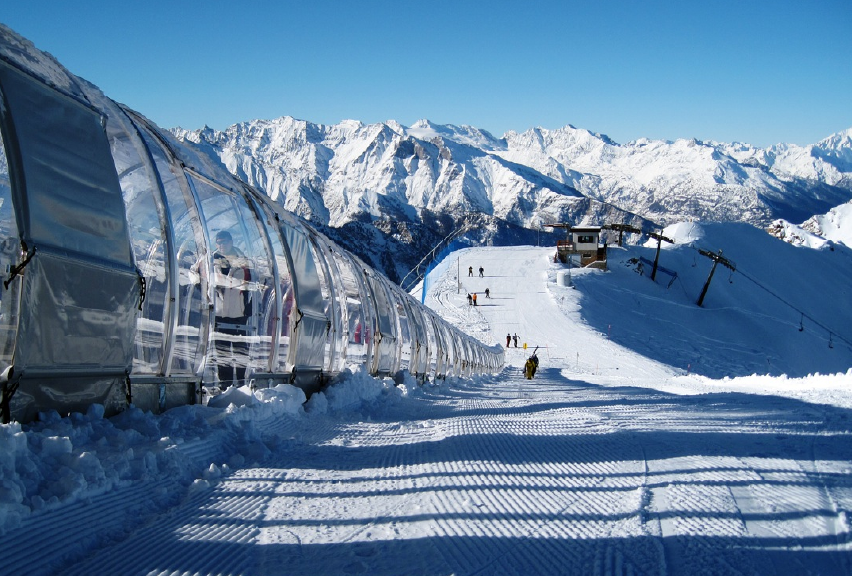
Set high above Aosta in the beautiful Aosta Valley, Pila is one of those resorts that feels made for students. From the centre of Aosta, an 8-person gondola carries you up to resort level in just 18 minutes.
Skiing in Pila
School groups choosing Pila will find 70km of pistes stretching from 1540m up to 2750m. The resort offers a varied ski area, with 6 easy runs, 20 medium runs and 4 difficult runs, so there’s plenty of terrain to keep mixed-ability groups happily occupied throughout the week.
For school ski trips, Pila is particularly strong for beginners and intermediates. First-timers can build confidence in the Baby Gorraz and Grimod areas, while students who progress quickly can move on to the reds that make up the backbone of the resort. Add in two ski schools with more than 170 instructors between them, and you have a resort that’s very well set up for steady, confidence-building progression.
One of the best things about skiing in Pila is that it manages to feel both manageable and varied. Beginners can stay in the more reassuring nursery and easy areas, while stronger skiers can head towards Chamolé, Couis and Platta del Grevon for longer, more challenging runs and some genuinely spectacular Alpine views. From up on the mountain, you can see some of Europe’s great peaks, including Mont Blanc, Monte Rosa and the Matterhorn.
Snowboarders and freestyle skiers are well looked after, too. Pila’s Areaeffe Snowpark sits at around 2,200m and was the first snowpark in the Aosta Valley. It’s divided into two sectors (one easier and one more challenging) and includes rails, fun boxes, kickers of up to 17m and a jibbing route of over 500m, so there’s enough here to keep both beginners and more experienced riders engaged.
Snow reliability is another major plus. Pila has 480 snow cannons capable of covering at least 80% of the piste, which is reassuring if you’re booking early or late in the season and need confidence that your students will get plenty of time on snow.
Overall, Pila feels like a resort that makes life easier for school groups. The layout is compact, the progression strong, and the direct lift access from Aosta helps the week run smoothly from the outset.
Staying in Pila
Pila itself is very much a resort built with skiers in mind. Hotels offer direct access to the lifts, and the village layout was designed to protect visitors from traffic, snow and ice, with many of the main buildings arranged above a covered road. That practical, purpose-built layout won’t be for everyone aesthetically, but the convenience is hard to beat.
What really adds something extra to a stay in Pila is its connection to Aosta. In less than 20 minutes, you can be back in the valley, in a city packed with Roman and medieval history. Aosta was founded as Augusta Praetoria in 25 BC, and its historic centre includes sights such as the Roman Bridge, the Arch of Augustus and the Porta Praetoria, making it a brilliant option for a cultural visit alongside skiing.
There’s plenty to do off the slopes within Pila itself, including snowshoeing, snowtubing, bobsleigh and sledging in a protected area next to the gondola station. That gives you useful flexibility for afternoon or evening activities without needing a long transfer.
Food is another strength. The resort has a good choice of restaurants, pizzerias and mountain huts, and the local Aosta Valley produce and traditional dishes are highly regarded in Italy. That all adds to the sense that, while Pila is practical and efficient, it still gives students a proper taste of Italian mountain life.
For us, Pila is a superb choice for schools that want straightforward organisation, strong beginner and intermediate skiing and the bonus of easy access to one of northern Italy’s most interesting small cities. It’s efficient, scenic and delivers that lovely balance trip leaders are always looking for (great skiing for students and a smoother week for staff).
Aprica
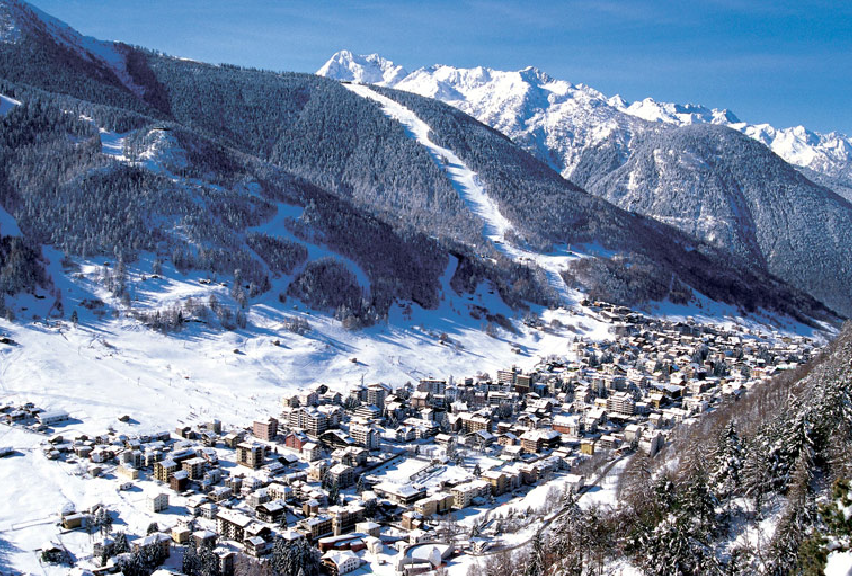
Set in Lombardy between Valtellina and Val Camonica, Aprica is a long-established resort that combines a friendly mountain atmosphere with a ski area that’s particularly well suited to school groups. The resort sits at the centre of a 50km ski area that rises to 2,300m and is divided into four interconnected sections, with runs leading back down towards the village.
Skiing in Aprica
In Aprica, you'll find around 50km of pistes served by 15 lifts, with terrain that caters well for a wide range of abilities. The four main sections of the ski area are Campetti, Palabione, Magnolta and Baradello, giving the resort a good sense of variety (without making it feel overwhelming).
Aprica is especially strong for beginners and lower intermediates. The Campetti area sits right in the heart of the town and is a real paradise for children learning to ski for the first time. Here, students will find short, easy slopes and a reassuring learning environment.
As confidence grows, students can begin to explore more of the mountain. The wider ski area offers everything from scenic blue pistes to red and black runs, with Palabione, Magnolta and Baradello providing a step up for stronger skiers. One of the best things about Aprica is that there’s a clear sense of progression built into the mountain, so beginners can start small and build up, while more experienced students still have enough challenge to keep them engaged.
A real highlight here is the Baradello Superpanoramico, a broad blue run of around 6km that descends towards the town. It’s easy enough for less experienced skiers to enjoy, but long and scenic enough to feel memorable. Better still, it’s also Europe’s longest illuminated piste, giving groups the option to extend the ski day and experience the slopes in a completely different atmosphere.
Snow reliability is another plus. Thanks to its position and programmed snow cover across the whole ski area, Aprica enjoys a long and stable ski season with consistently good conditions.
Overall, Aprica feels like a resort that understands what school groups need. There’s variety, progression and a practical layout that helps students spend more time skiing and less time dealing with complicated resort logistics.
Staying in Aprica
Aprica itself has a relaxed, traditional feel. Unlike some modern purpose-built resorts, it has roots in Alpine farming culture and is divided into quarters, rather than one central historic core. Some of these areas still retain a strong sense of the past, with murals and long-standing local traditions helping the resort hold onto its character.
Away from the slopes, Aprica has plenty to keep groups occupied. The resort offers snowshoeing and winter walking, while there’s also a local swimming pool and a sports centre with basketball, volleyball and five-a-side football facilities, giving teachers useful flexibility when planning evening activities.
Aprica also has a cultural side that adds something a little different to the school ski trip. The Ski and Mountain Museum traces the history of skiing from early wooden skis to modern racing equipment and includes some genuinely unusual exhibits, including a pair of wooden skis from 1890. It’s a nice extra for groups who’d benefit from a more rounded sense of place during their stay.
For us, Aprica is a great choice for schools looking for a friendly, manageable Italian resort with excellent beginner terrain, good intermediate progression and memorable extras like night skiing on the Superpanoramica.
Sansicario
Sansicario is one of our most popular school ski resorts in Europe (not just Italy).
A high-altitude, former Olympic resort, it was purpose-built in its location because of its snow security, good slopes and great connections to the other resorts of the Milky Way (Via Lattea) ski area.
Skiing in Sansicario
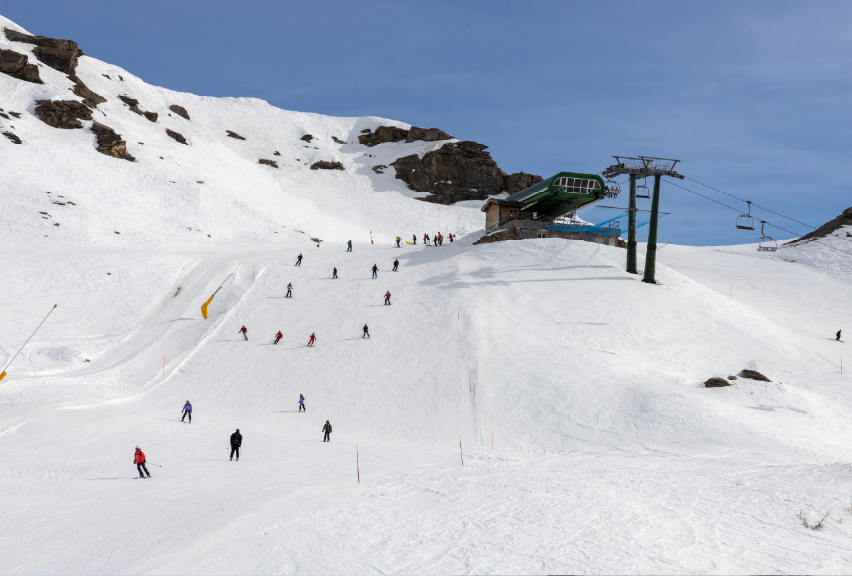
In Sansicario itself, you’ll enjoy long scenic motorways, as well as challenging reds that take you all the way back down to the resort centre.
And the big selling point is that you’ll have access to the rest of the Milky Way ski area, which includes resorts like Sestriere, Suze d’Oulx and Claviere and Montgenevre (over the border in France). As all the resorts are high-altitude, they are all known for boasting great snow conditions throughout the season.
Sestriere offers a great variety of skiing experiences, including World Cup runs. Sauze d’Oulx is famous for its long, sunny intermediate runs. Claviere has a great beginners’ area, as well as plenty of blues, reds and even Olympic runs. And over the border in France, intermediates will enjoy the variety of runs which often start above the treeline before descending through the trees at Montgenevre.
Staying in Sansicario
Staying in traffic-free Sansicario, right at the heart of the Milky Way, offers your group a safe, comfortable base, while you explore over 400 km of piste (which includes resorts in both Italy and France).
Sansicario itself has real character. Sansicario Borgo is a traditional Alpine hamlet set among woodland, while Sansicario Alto was used for the women's downhill and super-G during the 2006 Winter Olympics. The village grew from a cluster of ancient chalets and, although it was modernised from 1969 onwards, it still retains a strong sense of place.
The practical side is strong too. Sansicario Alto has all the amenities you could possibly need, and the whole area is a strategic access point to the Milky Way ski area.
Away from the slopes, there's enough here to keep the week varied, including snowshoeing, dog sledging and some fantastic restaurants. That opens up useful possibilities for evening activities or a change of pace after a full day on the mountain.
There's also a nice sense of history to Sansicario. The Olympic link gives the resort a level of prestige, but the older village setting stops it from feeling too manufactured. For us, that's part of the appeal. Sansicario offers a calmer, more traditional-feeling base than some of the headline resorts in the area, while still putting your group right in the middle of a huge ski domain.
For us, Sansicario is a great choice for schools looking for a quieter Italian resort with strong beginner and intermediate skiing, reliable access to a major linked area and a village that feels both practical and characterful.
Passo Tonale
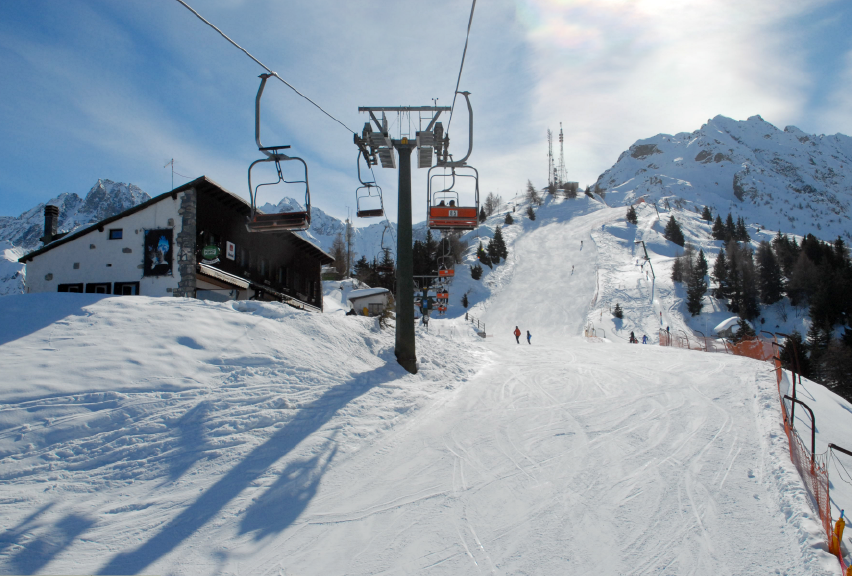
Set on the border between Lombardy and Trento-Alto Adige, Passo Tonale is a high-altitude resort with a broad open setting that works brilliantly for schools. Sitting between 1884m and 3100m, and backed by the Presana Glacier, it has a long snow season and a reputation for reliable snow conditions. It’s also sunny, panoramic and easy to navigate, which matters when you’re organising young skiers and want the week to run smoothly from the start.
Skiing in Passo Tonale
Groups choosing to ski in Passo Tonale will have access to the wider Pontedilegno-Tonale ski area, which includes 46 slopes served by 30 lifts across four linked ski areas. The resort offers 13 blue runs, 25 red runs and 8 black runs, so there’s plenty of variety for mixed-ability groups, while the single ski pass keeps the logistics reassuringly simple.
For schools, one of Passo Tonale’s biggest strengths is its suitability for beginners and lower intermediates. It’s the ideal place to learn to ski, thanks to its sunny exposure and slopes that suit both beginners and more confident skiers. That open landscape can be a real advantage for teachers too (it helps students feel less hemmed in and makes the mountain feel more manageable in those early days of the trip).
As confidence grows, students can branch out across the wider ski area and enjoy much of the mountain. There’s a strong sense of progression here, from gentler learning terrain to longer and more demanding descents. The panoramic Pista dell’Alpino stretches for 4.5km, while stronger skiers can test themselves on the famous black Paradiso run (3km long with a 710m drop). And for students who really want that end-of-week sense of achievement, the Presana-Tonale-Ponte di Legno descent covers 11km with a vertical drop of around 1740m.
Snowboarders will love Passo Tonale too. The Adamello Snowpark sits at 2,000m and includes an area for beginners, a sector for expert riders and a ski-cross slope with technical obstacles. That makes it a useful extra for groups with mixed interests and confidence levels.
All in all, Passo Tonale feels like a resort that makes school skiing straightforward. It’s snow-sure, spacious and offers that all-important blend of confidence-building beginner terrain and enough challenge to keep stronger skiers engaged across the week.
Staying in Passo Tonale
Passo Tonale is first and foremost a practical ski resort, and that’s part of its appeal for trip leaders. The wider Pontedilegno-Tonale area offers a broad range of accommodation, alongside plenty of restaurants, pizzerias and cafes. For teachers balancing budgets, rooming and convenience, this flexibility is a real asset.
Away from the slopes, there’s enough here to keep evenings interesting without overcomplicating the programme. The resort offers snowshoeing and dog sledging, and night skiing is available on the blue Pista Valena in Passo Tonale. For students, skiing under floodlight adds a memorable extra to the week. For staff, it’s another useful option when you want to vary the rhythm of the trip.
There’s also a fascinating historical dimension to the area. The Paradiso Tunnel (reached via Paradiso gondola) is a WW1 museum set inside a tunnel carved into the rock that was once used by soldiers to shelter from snowstorms, freezing temperatures and artillery fire. The resort area also includes the Ossuary Monument, linked to the history of the White War. That gives you scope to add genuine cultural value to the trip.
For us, Passo Tonale is a superb choice for schools looking for reliable snow, excellent beginner terrain and a resort that keeps things simple. It’s high, bright and brilliantly set up for progression. And when you’re leading a group of young people on the mountain, that combination can make all the difference.
San Martino di Castrozza
Surrounded by the spectacular Pale di San Martino, part of the Dolomites, this lovely Italian ski resort has one of the prettiest village centres we’ve seen, with twinkly lights, fantastic shops and excellent pizzerias.
Skiing in San Martino di Castrozza
San Martino di Castrozza is located at the southern edge of the Dolomiti Superski area and boasts 60km of runs. With a long season from late November to after Easter, this is a wonderful resort for all abilities.
The beginners’ area is located at a snow-sure 2100m and has great facilities, including a drag lift and magic carpet. And the progression to the wide, open blue runs is excellent.
Plus, there are plenty of thrilling reds and blacks for the more experienced skiers to stretch their ski legs on, as well as an abundance of long, challenging tree-lined runs. And there are two snow parks too, the San Martino Snowpark and the Rolle Railz Park.
Ongoing investment in the area has led to continual improvement. In recent years, the snow-making system has been modernised, and newer lift systems have been installed.
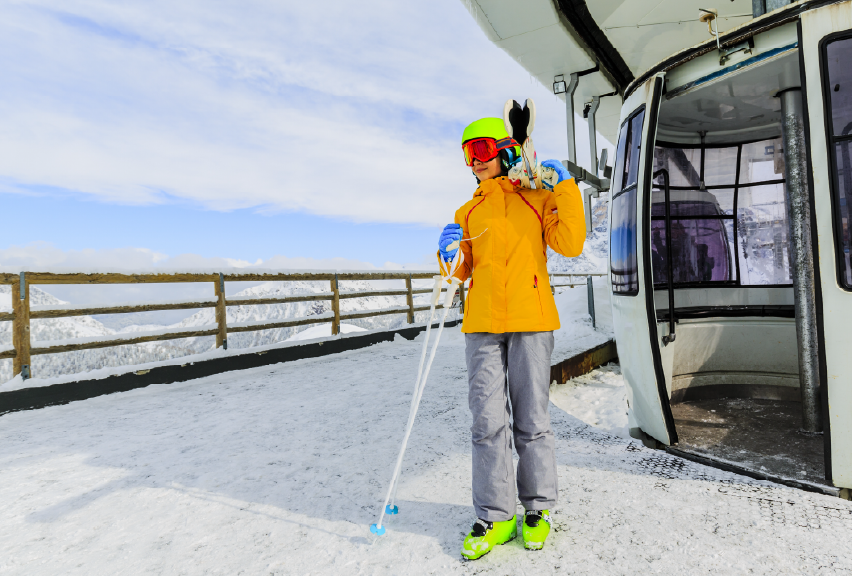
The gondola runs up from the base camp, where the ski fit and ski storage are. The journey time from San Martino to Valbonetta is just 6 minutes and, like all the lifts in the area, is powered by 100% renewable energy from two hydroelectric plants.
Staying in San Martino di Castrozza
Now one of the better-known resorts in the Dolomites, San Martino came from humble beginnings. The first settlement here was a religious hospice, offering shelter for travellers across the Alps via the Rolle Pass. All that’s left of this hospice is the San Martino church.
After the monks mysteriously left in the fifteenth century, the area remained largely abandoned for four centuries. It was eventually rediscovered by English explorers and became known as a summer resort for mountaineers, climbers, hikers, geologists and botanists.
Although destroyed by the retreating Austrians in the First World War, the resort was soon rebuilt and has gone from strength to strength ever since, with tourists beginning to come here to ski in the 1920s.
The town's shops centre around the old church. There are shops of all sorts, including an art gallery, designer clothes boutiques and even a chocolate shop (not to mention the all-important pizzerias).
The nearest town, Fiera di Primeiro, is in the valley below and has a lovely pedestrianised centre for a spot of souvenir shopping, chocolate (and maybe a slice of pizza).
Aside from skiing, there are some brilliant activities to try in the local area, such as winter mountain biking, snowshoeing and winter Nordic walking.
Cimone
While most of our Italian resorts are in the Alps, Cimone is in the Apennines. It is, in fact, the largest ski area (50km) in the Tuscan-Emilian Apennines and Monte Cimone itself is the highest mountain in the northern Apennines.
Skiing in Cimone
The resort can be split up into six areas – Passo del Lupo, Le Polle, Cimoncino, Lago della Ninfa, Montecreto and Pian del Falco. And these can be accessed via the four villages at the base of the mountain, Montecreto, Fanano, Riolunato and Sestola.
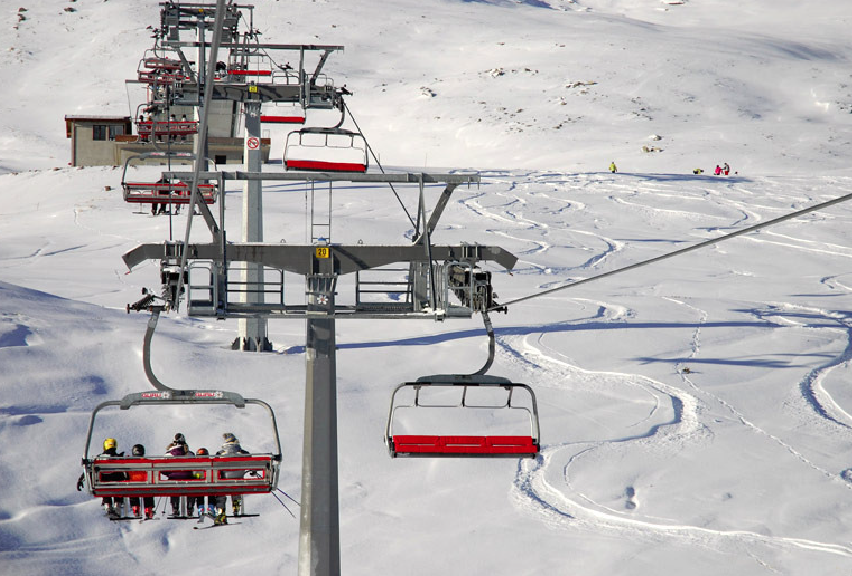
There are 26 slopes, all of which are connected to one another. And they’re served by 21 very modern lifts.
There are five learner areas here and plenty of progression slopes. And the ski school are really friendly and patient, so you can be sure that they’ll get the best out of your learners.
There’s also plenty for the experts, with six black runs including the famous Direttissima Paletta.
And snowboarders will be happy too – the snow park at Lago della Ninfa (Ninfa4all) boasts jumps, rails and step-ups suitable for all levels, laid out over 1km. The park’s sound system means that snowboarders will have a great soundtrack as they perfect their tricks.
Staying in Cimone
Children are made to feel very welcome in Cimone. Ski storage and hot lunches are offered on the slopes (so you won’t waste time skiing back to your hotel), and the slopes are generally fairly empty on weekdays (even during February half term), so you won’t spend half your trip queueing for lifts.
There’s plenty here to keep your group entertained when they’ve finished skiing for the day. The Palaghiaccio (one of the largest indoor ice centres in Italy) is located here. Or, if you fancy exploring the area a little more, you could swap your skis for snowshoes.
The resort is perhaps most famous as the home resort of Alberto Tomba (Tomba la Bomba). Tomba was a real powerhouse of slalom and giant slalom in the 1980s and 1990s, winning three Olympic gold medals, two World Championships and nine World Cup season titles. And he learnt his craft in Cimone.
In the Emilia-Romagna region, Cimone is in the province of Modena. Which is excellent news for any foodies in your group. This is the home of balsamic vinegar, Parmiggiano Reggiano and Lambrusco (one for staff only).
It’s also a very interesting location for any petrolheads among your group, as this is the heart of Italy’s Motor Valley. As well as the world-famous race circuits of Imola and Misano, this is also home to Ferrari, Ducati, Lamborghini and Maserati, among others.
Ready to start planning your trip?
Hopefully, we’ve given you some inspiration for your next school ski trip to Italy. Still have questions? Get in touch, and we’ll be pleased to help. Ready to get started? Ask us for a quote now.


