

For teachers planning a school trip to Spain, the Andalusian region ticks a lot of boxes. It's easy to reach from the UK, with curriculum-linked visits, and it's ideal for students studying Spanish, history and art.
Better still, it offers the kind of real-world immersion that brings classroom learning to life. Students don't just study Spanish here. They hear it in the streets, use it in the cafes and practise it with local people who genuinely appreciate the effort.
Andalusia is also wonderfully practical for school groups. Flights to Malaga take around two hours from the UK, it feels safe and welcoming, and the climate is pleasant for much of the year.
Recently, several members of our team travelled to Seville, Granada, Malaga and Benalmádena to visit our trusted language school partners, experience the destinations first-hand and see the kinds of visits our school groups enjoy. Their feedback was clear - Andalusia delivers. The language schools all had their own character, but every one of them was centrally located in a safe, accessible area that worked well for groups on a Spanish Language study tour.
So, if you're considering a school trip to Andalusia, here's a closer look at what your students could experience with an example 5-day itinerary.
Example 5-Day Itinerary For A School Group Visiting Andalusia
Day 1 - Getting there
- Flight to Malaga.
- Meet your private coach and transfer to your accommodation.
- Arrive at your accommodation and check in.
- Free time for local familiarisation on foot.
- Evening meal at your accommodation.
The first day of your trip to Andalusia will mostly be about getting there smoothly. For most UK groups, that means a short flight into Malaga Airport, the main gateway to the Costa del Sol.
With a flight time of around two hours, the journey is manageable for students and staff alike. And that makes a real difference on a school trip. Less time travelling means more time learning, exploring and actually enjoying the destination.
Most groups choose to stay in Malaga, which works particularly well as a base, thanks to its transport links and wide range of accommodation. We can also arrange stays in Seville or Granada if you'd prefer to spend longer in one city.
Once you've checked in, a gentle walk around the local area is a great way to help students get their bearings and enjoy a first taste of Andalusia (perhaps sampling some churros or helado along the way). By evening, everyone will be ready for dinner and an early night before the adventure properly begins.
Day 2 - Discovering Granada
- Breakfast at your accommodation.
- Meet your coach and transfer to Granada.
- Enjoy a self-guided visit to the Alhambra.
- Take a self-guided tour of the Parque de las Ciencias Museum or complete our self-guided interactive trail of Granada.
- Evening meal at your accommodation.
After a delicious breakfast at your accommodation, you'll meet your private coach and travel to Granada (a journey of around 2 hours if you're staying in Malaga).
Set against the backdrop of the Sierra Nevada, Granada offers students a remarkable introduction to the layered history of Spain. Over the centuries, the city was shaped by Iberian, Roman, Visigothic and Muslim rule. It later became the capital of the Emirate of Granada (the last Muslim-ruled state in the Iberian Peninsula) before being conquered by Ferdinand and Isabella in 1492.
That complex history is visible everywhere. The city feels like a meeting point between worlds, with Islamic and Christian influences sitting side by side in ways students can see for themselves.
One of the best places to see this is the iconic Alhambra (so, it's lucky that's your first stop of the day).
The Alhambra is one of the most famous Islamic monuments in Spain and, unsurprisingly, is a UNESCO World Heritage Site. From the defensive strength of the Alcazaba to the elegance of the Generalife, the Alhambra turns history from something abstract into something vivid and immediate.
After your morning there, you could make your way through the historic Albaicín district, where students will spot more traces of Granada's Moorish past.
In the afternoon, you might choose the Parque de las Ciencias for a more cross-curricular focus. Its interactive exhibits, planetarium and biodome make it an excellent option for groups wanting to add a science element to their trip.
Alternatively, our self-guided activity trail helps students engage more actively with the city while encouraging them to use their Spanish in context.
By the end of the day, you've got the kind of tired students that teachers always hope for - happy, full of stories and ready for dinner.
Day 3 - Exploring Seville
- Breakfast at your accommodation.
- Meet your coach and transfer to Seville.
- River cruise on the Guadalquivir.
- Self-guided visit to the Torre del Oro.
- Self-guided tour of Seville Cathedral.
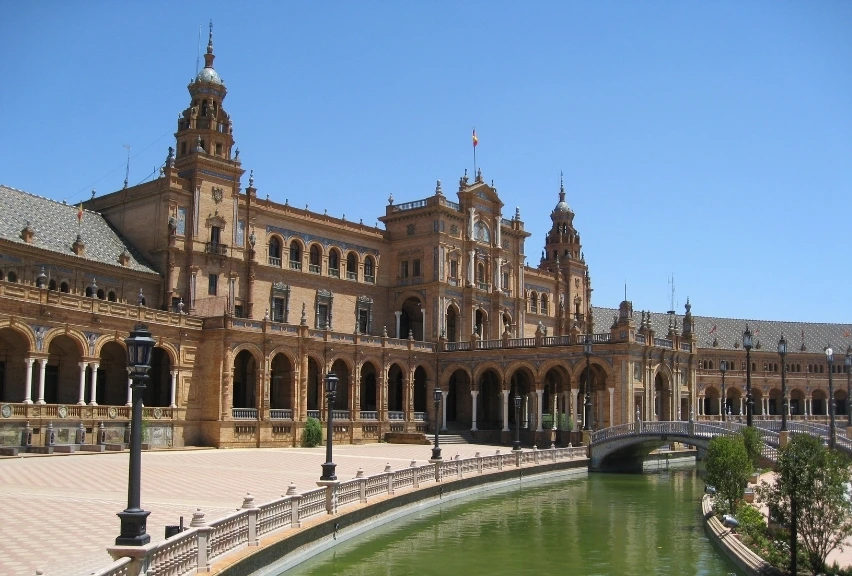
- Free time to explore the Parque de María Luisa and Plaza de España.
- Evening meal at your accommodation.
You'll start day 3 with a hearty breakfast (make sure everyone fills up because you've got another full day of exploration ahead).
Climb aboard your comfortable coach once again to head to Seville – a journey of around two and a half hours.
You'll arrive in a city that has played a major role in Spanish history for centuries. The River Guadalquivir helped make Seville one of the wealthiest and most important cities in Europe during the height of Spain's transatlantic empire, so starting with a river cruise is a brilliant way to introduce students to the story of the city.
Seville is also one of the best places to understand the legacy of Al-Andalus. Across the city, students can see how centuries of Islamic rule shaped language, architecture and identity in southern Spain.
After your cruise, a visit to the Torre del Oro adds another layer of context. Once part of the city's medieval defences, it now houses a naval museum that helps students understand Seville's relationship with trade, exploration and the sea.
Then there's Seville Cathedral (a must for any educational trip to Seville). Vast, dramatic and full of historical detail, it gives students the chance to explore one of Europe's great religious buildings while also spotting traces of the mosque that stood there before it. The Giralda (once a minaret and now the cathedral's bell tower) is a perfect example of Andalusia's architectural heritage.
After that, the Parque de María Luisa and Plaza de España offer a change of pace. They're ideal for photos, group time and soaking up the atmosphere of the city.
After a filling dinner back at your accommodation, why not see if your students recognised any of today's visits from films and TV shows (Seville is a popular filming location because of its spectacular architecture and brilliant weather). Did they recognise the Plaza de España from Star Wars Episode II (where it stood in for the Palace of the Kingdom of Naboo)? Or perhaps they recognised the Alcázar from Game of Thrones (where it featured as the Water Gardens of Dorne)?
Day 4 - Spanish Immersion in Malaga
- Breakfast at your accommodation.
- Spanish language lessons in the morning.
- Transfer to Malaga for a guided walking tour or self-guided visit to the Alcazaba to enjoy views of the city.
- Evening meal at your accommodation.
After another great breakfast, you'll head to one of our partner language schools.
Your students will spend the morning learning with experienced, native-speaking teachers. Lessons can be discussed in advance, so they reflect your group's level and learning goals (making sure the classroom experience feels purposeful and relevant).
You can choose to include lessons on more days if language learning is your main priority. Even then, students still experience plenty of culture, with activities such as walking tours, flamenco shows and paella-making workshops available.
In the afternoon, you'll head into Malaga. Our team's verdict from their recent trip was telling - of all the cities they visited, Malaga was their favourite. They loved its lively feel, mix of beach and city, delicious food and the sheer amount of things to do there for school groups.
Malaga works brilliantly for school trips because it offers substance as well as sunshine. It was the birthplace of Picasso, so it's a particularly strong choice for an art trip. But it also has nearly 3,000 years of history to uncover. Students will discover Phoenician walls, a Roman theatre and the impressive Alcazaba (one of the best-preserved Moorish fortresses in Spain).
Whether you choose a guided walking tour or a more focused historical visit, Malaga is the sort of place that keeps students interested, without overwhelming them.
Day 5 - Final lessons and journey home
- Breakfast at your accommodation.
- Check out of accommodation.
- Spanish language lessons in the morning.
- Transfer to the airport.
- Return flight home.
After another delicious breakfast, it's time to check out of your accommodation.
Before heading to the airport, there should be time for some more lessons at the specialist language school.
By this point, students usually leave with stronger language confidence, a better grasp of Andalusian culture and plenty of shared memories. That's the sweet spot for a successful trip - educational impact, cultural immersion and a group that comes back having genuinely experienced something.
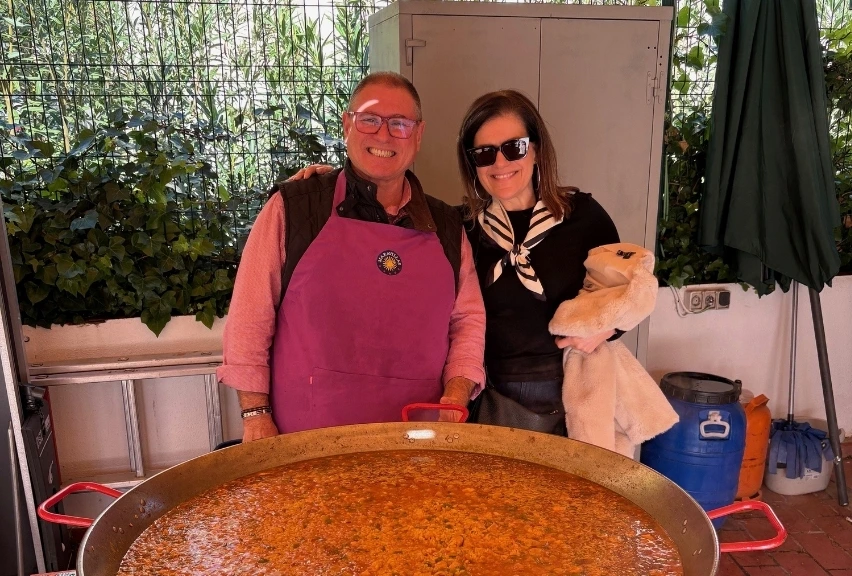
Do you have any insider tips for our school trip to Andalusia?
Our team did come back from their trip to Andalusia with a few tips worth sharing.
In Granada, the Alcaicería market is a great place for souvenir shopping and is one of the only places in Spain where you can have a go at haggling.
They were really enthusiastic about Malaga's food scene and singled out Tejeringo's Coffee for its excellent churros.
And for an evening activity near Malaga, they felt the flamenco show at Pepe Lopéz in Torremolinos made for a lively and memorable cultural experience.
These are exactly the sort of details that can help turn a very good trip into one that students talk about for years.
Ready to start planning your next trip?
If you're searching for a destination that feels manageable for staff, exciting for students and rich in learning opportunities, Andalusia is a brilliant choice.
From Spanish lessons in Malaga to the palaces of Granada and the cultural riches of Seville, this is a tour that delivers on language immersion, curriculum value and student engagement.
And this is just one possible itinerary. We'll tailor the trip around your group, subject focus and learning objectives. Our team has just returned from the region, so they can offer you fresh insight, practical advice and plenty of ideas to help you shape the right experience.
Enquire today to start planning, or get in touch if you have any questions.


Tour Consultant


