

But with so much to see and do in the French and Belgian battlefields, where do you start putting together a plan for your trip? That’s where our school travel experts come in. They’ve put together an example itinerary that covers all the highlights of the WW1 battlefields to help get you started.
Just remember, we don’t do ‘off-the-shelf’ trips at Halsbury. So, while we hope this inspires you, we’ll work closely with you to make sure your trip works for your specific group and learning objectives.
Example 4-Day Itinerary for a School Group Visiting the WW1 Battlefields
Day 1 - Arrival and first impressions
- Depart from school and travel to Ypres.
- Check in to your accommodation in time for your evening meal.
The first day of the trip is mostly a travel day. You’ll board your private coach at school and hop off at your accommodation in Ypres (it couldn’t be easier).
If there’s time when you arrive (and you’re not too tired from the journey), you could enjoy one of the free visits in and around Ypres. Otherwise, head to your accommodation to rest and enjoy a well-deserved evening meal before you step back in time tomorrow.
Day 2 - Exploring the Ypres Battlefields
- Morning visits to Tyne Cot Cemetery, Hooge Crater Museum and trenches, and Langemark Cemetery.
- Afternoon visit to In Flanders Fields Museum.
- Visit to Leonidas Chocolate Shop.
Your first full day of your WW1 battlefields tour will see you explore the area around Ypres.
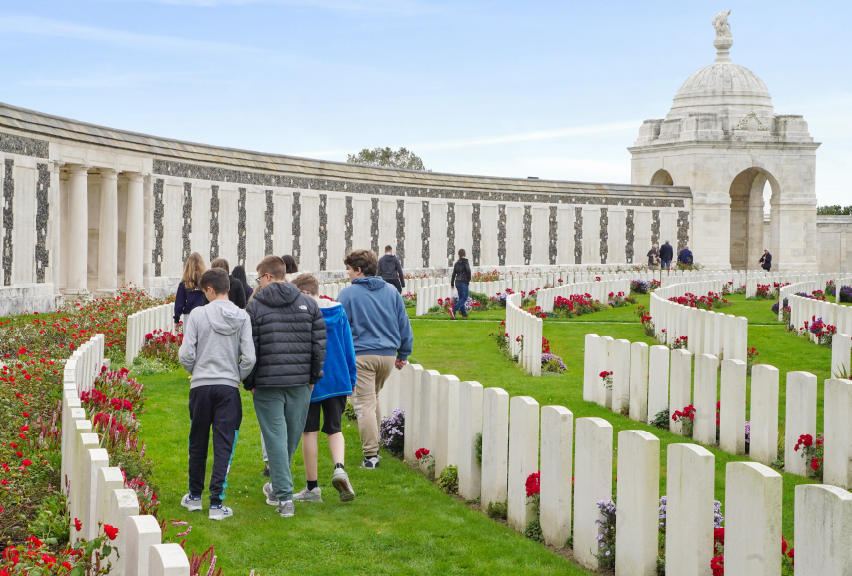
After a nourishing breakfast at the hotel, you’ll board your coach and head to Tyne Cot, the largest Commonwealth military cemetery in the world, and the final resting place of nearly 12,000 soldiers who died between October 1914 and September 1918.
It’s an ideal visit for helping your students understand the scale of devastation caused by WW1. It’s also the perfect place to reflect on the aftermath of war and how to commemorate this violent period in history.
Around 70% of the graves in the cemetery are unidentified British or Commonwealth soldiers. These are just a few of the 90,000 who died in the Ypres Salient but couldn’t be identified. These 90,000 names are listed on four memorials across the Ypres Salient, one of which can be found at Tyne Cot. This really demonstrates the scale of loss and sacrifice during the First World War.
You’ll notice that while most of the graves are laid out in a very regimented fashion, some near the Cross of Sacrifice seem to be laid out a bit more haphazardly. These date from between October 1917 and March 1918, after the British had captured the area from the Germans and turned it into an Advanced Dressing Station. These are the graves of the men who were treated here but died of their wounds.
The cemetery is beautiful, but also chilling when you see so many graves, line after line. The stones are all so bright in the sunlight, and there’s a strong sense of peace there (which feels like such a contradiction when you think about how these cemeteries came to be).
Your next stop is the Hooge Crater Museum. This small museum is privately owned, and the owners’ passion for sharing their knowledge is second-to-none. They have opened a viewing platform in the former chapel, where you can see across the former battlefields and cemetery across the way.
The museum houses a large collection of WW1 artefacts, including an original Ford T ambulance. There’s also an exhibition on medical aid, with a seating area for explanations. And there are even reconstructed trenches to the rear of the property. Opposite the museum is Hooge Cemetery, which is a large cemetery with lots of Victoria Cross recipients.
And, really excitingly, they’re also launching a new GCSE interactive history trail specifically for British students. Each student on the trail receives a free GCSE history booklet to complete while following the trail through the museum. Not only does this ensure they’re liking everything they see and experience with the course content, but they’ll also go home with a really handy revision tool (as they’ll take the completed booklets home with them).
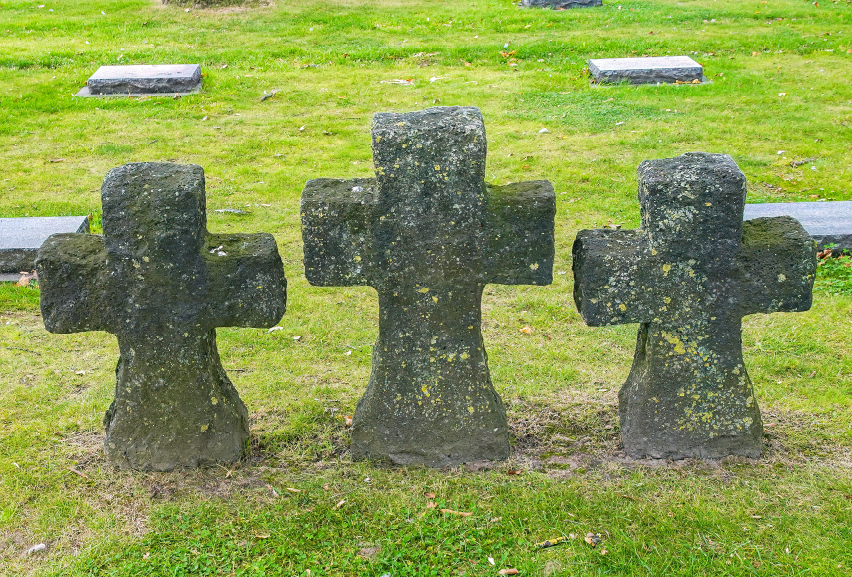
Langemark is a German cemetery, and a visit here will help your students understand that there were devastating losses on both sides. Over 44,000 soldiers are buried here.
Close to the entrance is a mass grave known as the Comrades' Grave (Kamaraden Grab). This is the final resting place of nearly 25,000 soldiers, of whom nearly 8,000 are unidentified. The names of those who have been identified (including German Ace Werner Voss) are inscribed on bronze tablets around the edge.
There’s also an area of the cemetery known as Studentenfriedhof (student cemetery), where the graves of 3,000 young student volunteers are located. The legend surrounding their deaths is sometimes referred to in German as Kindermord (massacre of the innocents) and became an important tool in Nazi propaganda. In fact, Hitler (who had served in the area during the war) visited this cemetery in 1940. So, a visit to Langemark Cemetery is also a good lesson in how history can be manipulated and used to further political goals.
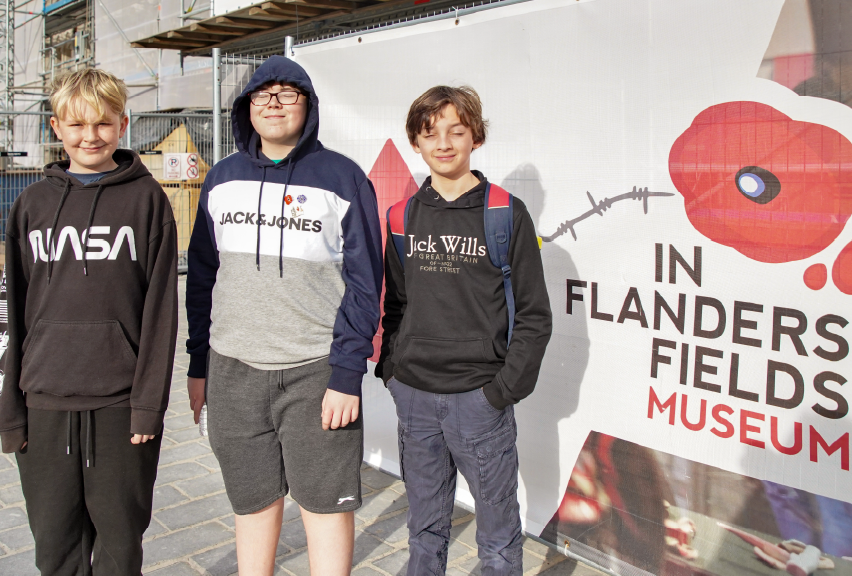
If you want your students to better understand the human impact of war, then we recommend a visit to the In Flanders Fields Museum. Housed in Ypres’ iconic Cloth Hall, the museum aims to bring the war to life for visitors, to help prevent history repeating itself.
You’ll all be provided with a poppy bracelet on arrival at the museum. As you explore the exhibition, you’ll be able to use that bracelet to scan and read personal stories supplied by those who lived through the war. You can even use the bracelet to send those stories to your email address, so you can refer back to them once you’re back in the classroom.
As you make your way around the museum, your students will be encouraged to think about why it’s important to learn about and remember the First World War.
After a long day exploring the battlefields (and before heading back to your accommodation for the night), you all deserve a sweet treat. Head to Leonidas Chocolate Shop in the main square in Ypres. This really is a ‘must’ for so many of our groups. Hans and Stephanie are delightful and have been welcoming our groups since we started running tours here, over 30 years ago.
Day 3 - Discovering the Somme Battlefields
- Morning visits to Lochnagar Crater and the Thiepval Memorial to the Missing.
- Afternoon visits to Newfoundland Memorial Park and Vimy Ridge.
- Attend the Last Post Ceremony.
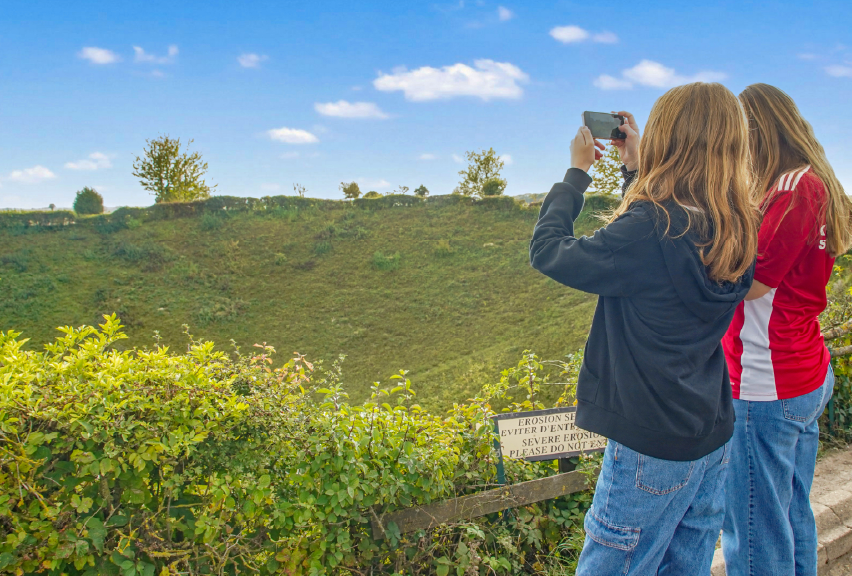
Day 3 is your opportunity to explore the battlefields of the Somme. Your first stop of the day is Lochnagar Crater, which is the largest man-made crater on the Western Front, and the ideal place to learn about the use of mines in WW1.
The mine itself was laid by the British Army’s 179th Tunnelling Company Royal Engineers underneath a German stronghold known as Schwabenhöhe. It was detonated at 7.28 am on 1st July 1916, two minutes before ‘Zero Hour’, at the start of the Battle of the Somme.
Although it detonated successfully, it didn’t have the desired effect, and the defending Germans were still able to find positions from which to fire at the advancing British infantry, many hundreds of whom were killed.
The mine was named after Lochnagar Street, the British communication trench from which the shaft was sunk. The crater is 30m deep and 100m wide, and it’s thought that the remains of many British, French and German soldiers are still left undiscovered there (which is why a memorial service is held at the crater every year on 1st July).
There’s also a wooden cross that stands above the crater. Made from timbers reclaimed from a deconsecrated church in Durham, it serves as a reminder that many of the men lost here were miners from Tyneside (drafted for their expertise in tunnelling).
Your next stop, Thiepval Memorial to the Missing, will help your students understand the scale of the devastation caused by the First World War. The memorial bears the names of over 72,000 men who lost their lives on the battlefields of the Somme before 20th March 1918 (the day before the German ‘Operation Michael’ was launched, where a further 177,739 casualties were suffered by the British) and have no known grave.
90% of those commemorated here lost their lives in the 1916 Battle of the Somme, which took place between July and November 1916.
This is an Anglo-French memorial, commemorating the alliance between Britain and France in the 1916 Somme Offensive, and the shared experience and grief of the two nations. Of the graves that lie at the foot of the memorial, half are French, and half are British Commonwealth. The two countries’ flags both fly at the top of the memorial itself – the Union Jack flying on the northern side (as the British were in action on the northern part of the battlefields) and the French Tricolore on the southern side (where the French were engaged).
Your next stop, Newfoundland Memorial Park, is one of just two Canadian National Historic Sites outside of Canada (the other is Vimy Ridge). The park is a memorial to nearly 800 men from the Royal Newfoundland Regiment who were lost on 1st July 1916, when they advanced on the German front line at the start of the Battle of the Somme. It’s also a memorial to the other Newfoundlanders lost during WW1, as well as the soldiers of other nationalities who died here.
A visit here gives your students the chance to walk across an actual battlefield. They’ll be able to study a preserved trench system, and they’ll learn more about the role of the Commonwealth forces in the First World War.
Make sure you leave enough time to visit the famous caribou monument on the western side of the park. The caribou is the symbol of the Royal Newfoundland Regiment, and this one looks out across the very spot where the regiment advanced towards the enemy line, many of them not making it. The monument is surrounded by plants native to Newfoundland. And it also stands over three plaques which bear the names of 814 Newfoundlanders lost at land and sea during WW1.
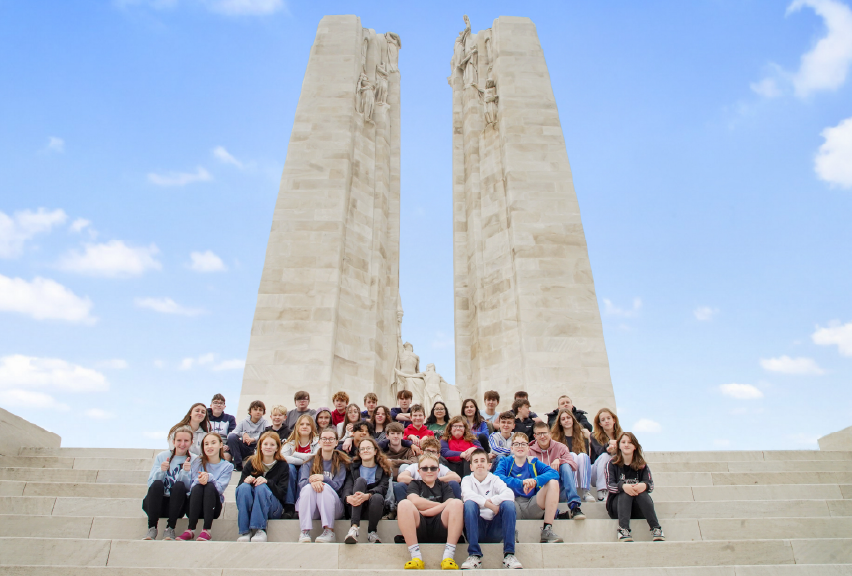
The Canadian National Vimy Memorial is a memorial to all the Canadians who lost their lives in the First World War. A visit here will help your students to understand the global reach of the conflict. Canada was still a British dominion in 1914, and so when the United Kingdom declared war on Germany, it also dragged Canada into the war. Of the 625,000 soldiers who enrolled, 60,000 died. And on the Western Front, one in seven Canadian soldiers was killed.
The memorial itself is hugely symbolic and definitely worth a visit. It’s the powerful realisation of a competition-winning design that will really help your students to consider the devastating effects of WW1.
The memorial consists of two 30m high pylons, representing France and Canada – two nations united in sorrow and the sacrifice of war. There are 20 human figures around the memorial, including 8 that represent Justice, Peace, Hope, Charity, Honour, Faith, Truth and Knowledge. Between the two pylons is the figure of a dying soldier, known as the Spirit of Sacrifice, and his comrade, to whom he has passed a torch. On the southern side of the memorial, flanking the steps, are two figures representing the parents of the soldiers who were killed. And, finally, a lone female figure looks down on a stone sarcophagus. She represents ‘Mother Canada’ or ‘Canada Bereft’, with the tomb representing Canada’s war dead.
While the memorial is impressive and loaded with symbolism, it’s not the only site of interest within the park - there’s also a section of original trenches, both Allied and German, which can be visited (in fact, this is one of the few places on the Western Front where you’re able to walk through a section of the ‘original’ trenches). There are also sections of tunnels you can visit, and some of the park has been left in its cratered state to allow visitors to see the effects of war on the landscape.
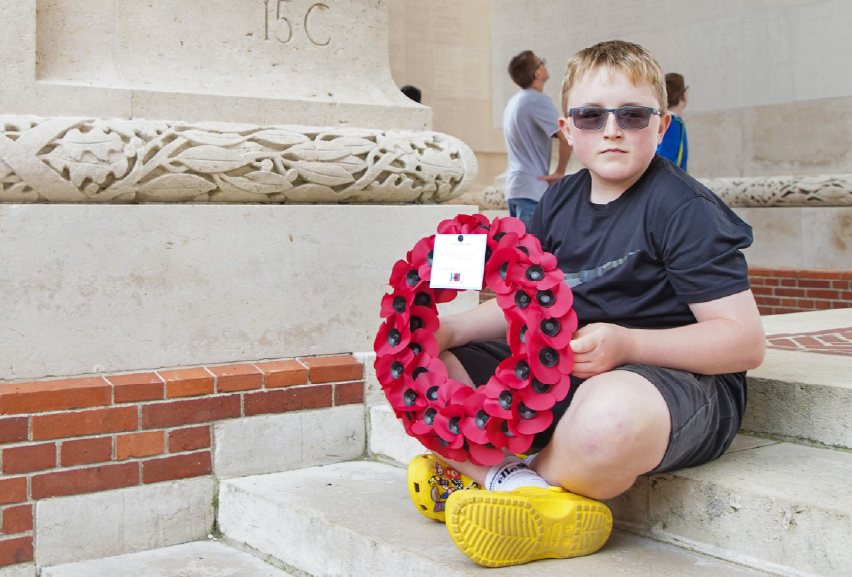
You’ll head back to Ypres in time to attend the Last Post Ceremony at the Menin Gate. The ceremony is performed every evening at 8 pm to commemorate and honour the many thousands of soldiers lost at war whose whereabouts remain unknown (etched into the gate’s walls are the names of 54,000 such soldiers). Viewing the ceremony is a must when you visit the WW1 Battlefields, and we can arrange for some of your students to lay a wreath on behalf of your school if you’d like to.
The Menin Gate stands on the road that took soldiers out of Ypres and into battle, making it a poignant place for a memorial. But the Menin Gate is a living memorial. In the countryside surrounding Ypres, the remains of soldiers are still being discovered. If they’re identified as those of a soldier named on the Menin Gate, that name is removed from the memorial and the soldier receives a proper burial within one of the nearby military cemeteries.
Day 4 - R&R on the Battlefields
- Morning visit to Talbot House.
- Return journey to the UK.
The fourth and final day of your trip will mostly be taken up by the journey back to school. But first, you’ll make a stop at Talbot House.
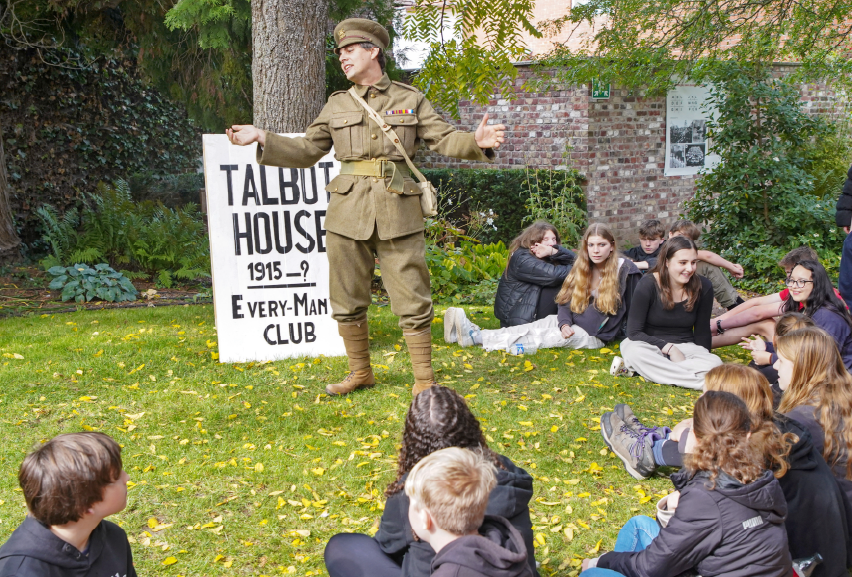
A visit to Talbot House, an ‘every-man’s club’ in Poperinge (in what was unoccupied Belgium), is a wonderful insight into other aspects of life at the Front. Talbot House was open for three years from the end of 1915 and hosted thousands of servicemen, for whom it was a home-from-home and a sanctuary from war. It had a lovely garden, where men could enjoy some much-needed peace and quiet, and firstly a chapel, and then a concert hall, in the hop loft.
It was also a place where men could socialise and even catch up with friends and family who were also serving on the Western Front. Rank was left at the door, and the men were allowed a little piece of normality.
This is a truly lovely place to visit, offering a warm welcome to this day. It also shows how even in the worst situations, like war, humans manage to find fun, laughter and companionship to keep up morale.
Run by volunteers, the house is so important to the community, and their commitment shines through in the care they’ve taken of this historic building. On arrival, a free introductory talk will be given (usually in the concert hall) to explain the history of Talbot House. You’ll then have the chance to explore the history of the house through the museum, and you can even choose to enjoy some tea and cake (served by the House Wardens) for a real taste of what the soldiers experienced here.
After an unforgettable morning at Talbot House, it’ll be time to climb back on the coach for the journey back to school.
FAQs
Why should we visit the WW1 Battlefields?
A visit to the WW1 Battlefields will really immerse students in the history of WW1 and the battles that took place in this area. The Belgian people welcome you with open arms and are so keen to share the stories of this terrible war with you, but also to show you how resilience shines through and how, through conflict, can come peace and resurrection.
What age groups are WW1 Battlefield tours suitable for?
WW1 battlefields tours are suitable for all age groups (including primary) but are most popular with groups studying history at GCSE.
A school trip to the WW1 Battlefields offers the following curriculum links:
- Primary:
- British history beyond 1066
- Key Stage 3:
- Challenges for Europe & the wider world
- GCSE:
- Developments in British warfare
- Conflict and tension: WW1
- History of medicine
- Medicine in Britain
- The Western Front
- Life in Wartime Britain
- A-Level:
- The changing nature of warfare
- Life in the trenches
- Developments in British warfare
- Life in wartime Britain
How can the Somme or Ypres support trench warfare learning?
In both the Somme and the Belgian battlefields around Ypres, your students will be able to visit reconstructed trenches. They’ll also visit some of the region’s fantastic museums, where they’ll hear (and in some cases, immerse themselves in) the experiences of the soldiers serving in the trenches during WW1.
How long should we stay in the WW1 Battlefields?
To make the journey worth it, you should aim to stay for a minimum of 2 days, but the majority of our groups tend to visit for 3 or 4 days (and you’ll need to stay for four days if you want to visit the area around Ypres and the Somme). You can also choose to stay for up to 5 days.
It all depends on what visits you want to include and how wide an area you plan to explore. If you’re not sure how long you’ll need, just get in touch, and we can help you work it out.
When should we visit the WW1 Battlefields?
School groups can (and do) visit the WW1 battlefields all year round. It is worth bearing in mind, though, that the museums in and around Ypres are generally closed in January, reopening in early February.
Where should we stay?
For groups based around Ypres, the Hotel Menin Gate is one of the most popular accommodation options among our groups. This hotel is all about location, location, location – as the name suggests, it’s right next to the Menin Gate and within just a couple of minutes’ walk of the centre of Ypres. The hotel is basic but comfortable and offers all the facilities that school groups require.
Its sister properties, Poppies 1&2 and the Salient 1&2, all have a very similar feel, with all the multi-bedded bunk rooms offering en-suite bathroom facilities. They also offer great communal spaces, including games rooms and private teachers’ lounges.
The De Iep Hostel is located just outside the town centre. It’s really welcoming, and the staff are really great. The main bonus here is their outside space – they have a playing field out the back, so groups can let off some steam after a day on the coach.
The Peace Village is situated in nearby Messines. This is a village-style accommodation with studios, some of which are two levels with a living area, which is great for groups who need a little more space.
For groups focusing on the Somme, the usual base of choice is the town of Albert, as it’s so central. The most popular accommodation here is Poppies d’Albert, which is an accommodation centre that’s been purpose-built for school groups.
Can we visit the graves of former students of our school, or current students' relatives?
Of course, in fact, that’s a great way to make the trip more personal for students and give the historical events they’re learning about more meaning.
You could even encourage students to research them as part of a project leading up to the trip. The first step is to get as much information on the servicemen you want to trace as possible (you can often just search on a surname, but the more information you have, the more certain you can be that you’ve traced the correct serviceman – regiment and regiment number are particularly useful bits of information to have).
Many of the war grave agencies provide online access to their records, so this is usually the easiest place to start. You can often find really useful information through these agencies, including the date of death, age, military service unit, next of kin and place of burial or memorial.
It’s important to remember that not all WW1 records are complete. So, to build a more complete and accurate record of their relatives’ service and experience of WW1, students should look at several resources and to cross-reference them.
What other visits and activities are available in the WW1 Battlefields?
There are far too many sites of interest in and around the battlefields for us to mention here. But there are two fantastic museums that we haven’t included in our example itinerary, which are very popular and worth considering adding to yours.
Housed in a historic château, the Memorial Museum Passchendaele 1917 tells the story of the Battle of Passchendaele (a.k.a. the Third Battle of Ypres) - a battle that has come to symbolise the futility of war. More than half a million casualties were suffered here for a territorial gain of just 8km. This is an interactive museum, which means that your students can really immerse themselves in the history. They’ll discover historical artefacts, authentic letters, uniforms and video clips.
The big draw of this museum is the fact that it offers students the chance to actually experience life in the trenches. There is a reconstructed dugout, complete with bunks, communication posts and even an operating theatre. And in the grounds are reconstructed trenches. Both offer students the opportunity to really get a feel for the claustrophobic conditions soldiers were living in.
Plus, if your students are aged 14 years and above, you can choose for them to take part in the Platoon Experience. This will see them transformed into an Australian platoon from 1917, and follows their story along the Ypres-Roeslare railway to Tyne Cot Cemetery. They’ll wear period costumes and will each become a particular soldier. Throughout their experience, they’ll discover more about that soldier’s experiences before finding out what his eventual fate was.
The other museum worth mentioning is the Somme 1916 Museum (10m below the British garrison town of Albert), which will help your students better understand what life was like for soldiers in the trenches during the Somme offensive of July 1916. Your students will have the chance to see weapons, uniforms and other artefacts of the era. And, in the museum’s new exhibition hall, the personal stories of nine soldiers will help your students to understand the human experience of war.
Exploring the WW1 battlefields can be heavy and emotional for students. If you feel your group might need a bit of light relief, you could consider adding a visit to Bellewaerde Aquapark. This great park has a zoo and fairground rides and is close to the Hooge Crater Museum. You’ll find 34 attractions, 130 animals, 14 restaurants and 4 shops here, as well as indoor and outdoor pools.
Is there anything else to know before going on a WW1 Battlefields tour?
If you’re told to stick to paths, please make sure that everyone in your group takes this instruction very seriously. You may visit some areas where unexploded munitions could still lie undetected, so this is for your own safety.
If you spot a shell, do not pick it up – it could potentially still explode. In fact, it’s better to be safe than sorry, so you should never pick up anything you find on the WW1 battlefields.
It can get quite muddy out there, particularly in autumn and winter, so pack suitable clothing. And sensible shoes are a must, particularly if you’re intending to explore trenches and dugouts.
Ready to start planning your next trip?
Just ask us for a no-obligation quote today.


Tours Sales & Product Manager


