

The government has recently announced details of the UK’s return to the Erasmus+ programme. And you may be wondering: could Erasmus+ help fund an international experience for your students?
The answer is yes. Let’s find out how.
What’s happening with Erasmus+?
The UK and EU have agreed that the UK will rejoin the Erasmus+ programme from 2027.
Erasmus+ provides funding for international placements and partnership projects across education, training, youth and sport. For schools, this can mean opportunities for students and staff to spend time abroad for learning, training or work-related activities. It can also support schools to work with organisations in other participating countries on shared projects.
The next funding round is expected to open in November 2026 and close in February 2027 (with exact dates due in the 2027 Erasmus+ Programme Guide).
That gives schools time to think, plan, partner and prepare. And that’s important, because to get the funding, an Erasmus+ project needs to be a structured learning experience with clear objectives and purpose (as well as a strong partner).

What could Erasmus+ fund for schools?
For many schools, the most relevant part of Erasmus+ will be Key Action 1 mobility projects (which support visits abroad for pupils and education staff).
Group mobility can allow up to 30 students (plus accompanying staff) to visit a partner school abroad for durations of 2 days to 1 month. The mobility can sit within a curriculum area, or it can be a cross-curricular or enrichment project, but it must be educational, transnational, structured and strategic. It cannot be touristic or recreational (so, unfortunately, a school ski trip would not be considered eligible for Erasmus+ funding).
There are also options for individual mobility for students (including short-term stays of 10-29 days and longer mobilities of up to 1 year) and for staff (including job shadowing, teaching abroad and training courses abroad).
Then there’s Key Action 2, which supports partnerships between organisations. Small-scale partnerships are designed to help schools take part in practical international projects (especially if they’re new to Erasmus+), while larger cooperation partnerships may suit academy trusts, local authorities and other larger education organisations.
In other words, Erasmus+ could support a wide range of international learning. A language exchange. A shared sustainability project. A joint arts programme. A staff development visit. Or even a partnership focused on inclusion, digital learning or democratic participation.
But first, you’ll need a partner.
Finding a partner: what schools need to know
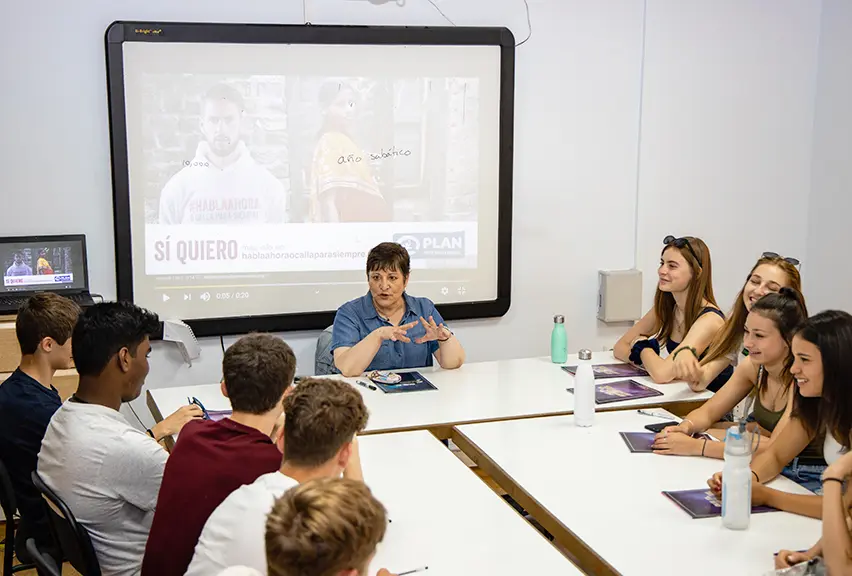
Schools need to find their own partner schools or partner organisations for Erasmus+ exchanges and projects. Halsbury can’t do this for you, and we can’t apply for Erasmus+ funding on your behalf.
That partnership (and the funding application) sits with your school, trust or eligible organisation.
However, we can suggest some practical ways to begin.
Start with the links you already have
Your MFL department may have long-standing contacts. Your trust may have schools with European connections. A member of staff may have worked abroad. Your local authority may have town-twinning links. Parents, alumni and subject networks can sometimes open doors too.
Use the European School Education Platform
You’ll find various routes to connect with schools and organisations on this platform.
Look at past projects
Erasmus+ has a project finder where schools can explore examples of ongoing and completed projects. This can help you spot what a strong project looks like (and what sort of partner might suit your aims).
Write a clear partner brief
Keep it practical and include:
- Age group
- Subject focus
- Preferred dates
- Exchange length
- Learning objectives
- Language requirements
- Hosting expectations
- Accessibility needs
- Staff involvement
- Build the project around purpose
Erasmus+ applications are expected to connect with programme priorities, including inclusion and diversity, the environment and climate change, digital transformation and participation in democratic life.
Where Halsbury comes in
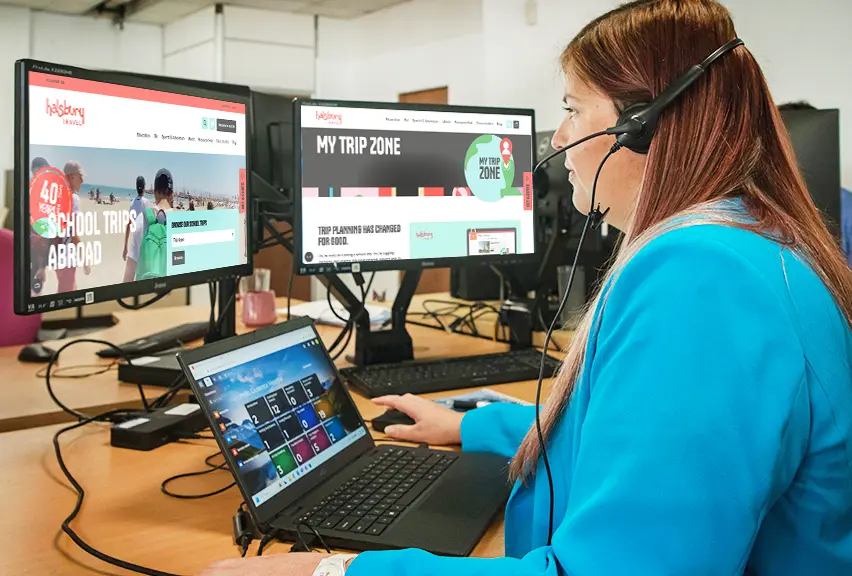
Once your school has a partner in place (and you know where your group needs to travel), Halsbury can support the practical travel arrangements.
We can help you shape the travel side of your Erasmus+ project around your learning objectives, your budget, your dates and your students’ needs. As a tour operator, we’d usually need to organise at least two of your travel elements (e.g. your transport and accommodation) for the arrangement to be considered a package.
That’s really important for schools, because booking travel as a package through a specialist school tour operator makes the whole process clearer, safer and more manageable.
With Halsbury, you’ll be working with a fully-accredited school tour operator. Halsbury is an ABTA member, our air tours are ATOL protected, and our coach tours are protected by our ABTOT membership. We’re also an Assured Member of the School Travel Forum, and we’ve been awarded the Learning Outside the Classroom Quality Badge.
That means reassurance for senior leaders, parents, and for you as group leader.
It also helps with the familiar school trip workload, including the paperwork, due diligence and risk assessments.
We’ll build your trip around your objectives, curriculum and budget, provide practical information packs and offer support every step of the way from the initial conversation to 24-hour emergency contacts while you’re travelling.
In short, we help you turn a funded international project into a well-planned, purposeful educational visit.
When should schools speak to Halsbury?
Once you have a potential partner school (or a clear destination linked to your Erasmus+ project), it’s worth talking to us early.
We can help you understand what the travel arrangements might look like, what’s realistic for your group and what you may need to factor into your planning. That can be especially helpful before dates, group size and travel preferences become fixed.
Then, once your funding and partnership are confirmed, we can help you refine the details and bring the trip together.
Erasmus+ could open the door. Halsbury can help with the journey.
Erasmus+ has the potential to create powerful international opportunities for students and staff.
For students, it can mean confidence, independence, cultural understanding and language development. For staff, it can mean professional growth, fresh classroom ideas and first-hand experience of another education system.
But opportunity needs organisation, and that’s where we come in.
Find your partner. Shape your project. Apply through the official Erasmus+ route.
Then, when you’re ready to plan the travel, talk to Halsbury. We’ll help you arrange the practical pieces (the protection, paperwork support and school travel expertise you need) so you can concentrate on what matters most.
The learning. The students. The moment they realise the world is bigger than they thought.
For more information on eligibility, opportunities and advice on how to apply, visit the UK National Agency website.