

Valencia works brilliantly for MFL groups. It's a compact, welcoming city where students can move from structured lessons to real-life language practice in a market, museum or family home. They'll hear Spanish throughout the day, and they may spot Valencian on local signs too (which opens up useful conversations about regional identity and Spain's linguistic diversity.
Over 5 days, your students can build their confidence in morning lessons, explore Valencia's old town, visit the futuristic City of Arts and Sciences and discover the city's food culture through a paella or Mediterranean gastronomy workshop.
The success of a language trip isn't just about fitting in as much as possible. It's about progression, pace and purpose. Students need the confidence to try, the space to make mistakes and plenty of reasons to speak. This sample itinerary balances focused learning with supported opportunities to use Spanish in context.
And it is only a sample. Every Halsbury school trip is completely tailor-made around your group's learning objectives, age, ability, budget and specific requirements. Your itinerary could include different visits, more or fewer lessons, another accommodation option or a different trip length.
The Itinerary at a Glance
Day 1: Fly to Valencia, meet your host families and get to know the local area.
Day 2: Begin Spanish lessons, enjoy a barbecue on the language school's terrace and explore Valencia's old town with a guide.
Day 3: Continue Spanish lessons and visit the Science Museum and the Hemisfèric at the City of Arts and Sciences.
Day 4: Continue Spanish lessons before a paella cooking workshop or a guided Central Market and Mediterranean gastronomy experience, followed by a disco.
Day 5: Complete the final Spanish lesson, transfer to Valencia Airport and fly back to the UK.
Example 5-Day Itinerary for a Spanish School Trip to Valencia
Day 1 - Arrive in Valencia and meet the host families
- Make your own way to your UK departure airport
- Fly from the UK to Valencia
- Collect your luggage and meet your local representative
- Meet the host families and transfer to your accommodation
- Explore the local area on foot (flight times permitting)
- Evening meal with the host families
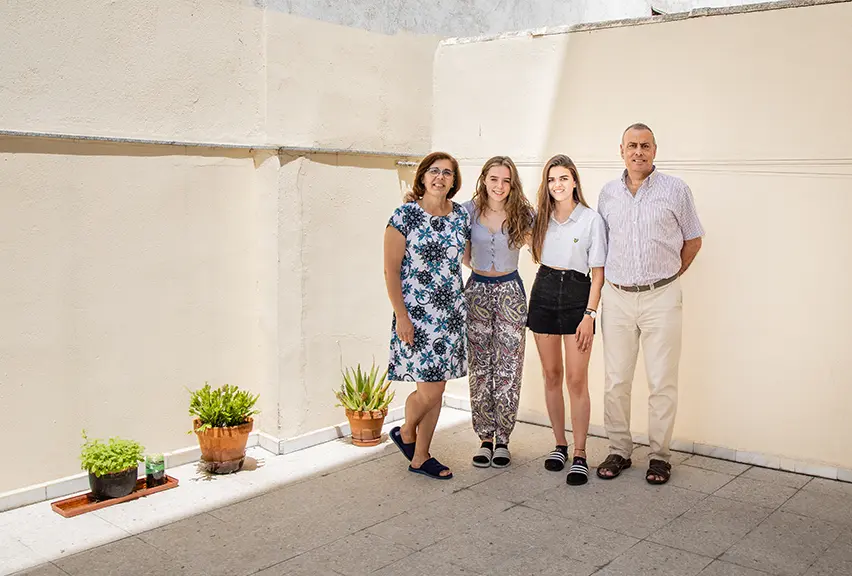
After your flight to Valencia, your group will collect its bags and meet the local representative. Students will then meet their host families and travel to their accommodation.
Arriving in a new city with a group of young people is enough for one day. That's why this first afternoon is deliberately light. If flight times allow, students can take a short walk around the neighbourhood to identify useful landmarks and get their bearings before dinner.
The language learning starts straight away. Simple exchanges with host families (greetings, introductions, meal-time conversation and questions about the home) give students an immediate reason to communicate. For some, this may be the first time they've used Spanish outside the classroom. A friendly first evening helps them settle in and start speaking.
Day 2 - Spanish lessons and Valencia's old town
- Breakfast at your accommodation
- Walk or take public transport to the language school
- Morning Spanish lessons in closed groups
- Barbecue on the language school's terrace
- Guided walking tour of Valencia's old town
- Evening meal with host families
Students are usually accompanied to the language school on the first morning. This helps everyone learn the route and understand the practical routine before making the journey on the following days. It's worth noting that students will be accommodated with at least one other student from your group, so they won't be travelling to the language school themselves.
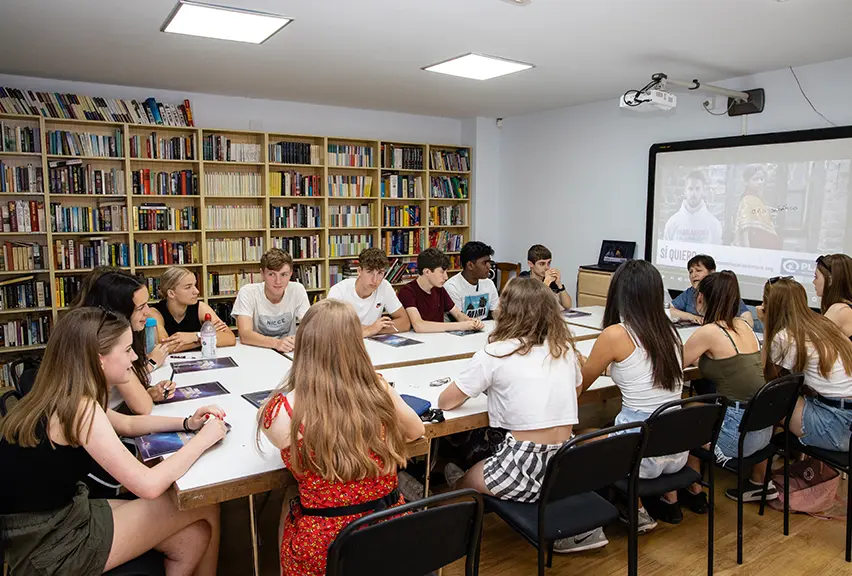
Morning lessons take place in closed groups (so your students learn together, rather than joining an open adult class). The content can be matched to their age, level and learning objectives. You might ask the teaching team to focus on speaking confidence, GCSE themes, transactional language or vocabulary that students will need during the afternoon's activity.
Lunch is a delicious barbecue on the school terrace before the afternoon's activities. It's a relaxed chance to revisit new vocabulary and compare first impressions of the city.
After lunch, a guided walk through Valencia's historic centre turns the city into a live learning resource. Depending on the final route, students may explore the El Carmen neighbourhood, see the cathedral, pass the Central Market and (just opposite) the UNESCO-listed La Lonja de la Seda. This former silk exchange is a powerful reminder of Valencia's past as a major Mediterranean trading city.
Encourage students to listen for familiar words, read signs and prepare one question for the guide in Spanish (small, achievable tasks that can build confidence fast).
In the evening, students will return to their host families with plenty to tell them about their day.

Day 3 - Spanish lessons and City of Arts and Sciences
- Breakfast with the host families
- Walk or take public transport to the language school
- Morning Spanish lessons in closed groups
- Time to buy or eat a packed lunch
- Self-guided visit to the City of Arts and Sciences
- Visit the Science Museum and Hemisfèric
- Evening meal with the host families
The familiar morning routine gives students another chance to manage everyday interactions in Spanish before continuing their lessons.
In the afternoon, the group will head to Valencia's City of Arts and Sciences. Its dramatic architecture creates an immediate contrast with the old town explored the previous day.
The Science Museum is highly interactive, with exhibitions and demonstrations designed to make visitors question, test and discover. The nearby Hemisfèric is the iconic eye-shaped building at the heart of the complex. Inside, its large domed screen hosts immersive projections (often on science or natural themes).
This is a strong cross-curricular afternoon for science students, but it also gives MFL learners useful new contexts. You could ask students to create a short Spanish review, describe the architecture or choose the exhibit they found most interesante, sorprendente or extraño. They don't need perfect Spanish; they just need the confidence to communicate.
After the visit, students will return to their host families for dinner and another opportunity to describe their day.

Day 4 - Spanish lessons and Valencian food culture
- Breakfast with host families
- Walk or take public transport to the language school
- Morning Spanish lessons in closed groups
- Paella cooking workshop, or a guided visit to the Central Market with a Mediterranean gastronomy workshop
- Disco
- Return to host families
The final full day brings language and food together. Valencia is widely recognised as the birthplace of paella, so learning how to make it here connects vocabulary, culture and regional identity in one memorable activity.
During a paella workshop, students can practise the language of ingredients, quantities, instructions and opinions. They'll need to listen, cooperate and follow a process. Most importantly, they'll be using Spanish to achieve something tangible (and edible).
Another option is a guided visit to the Central Market, followed by a Mediterranean gastronomy workshop. The market gives students a lively introduction to local produce and everyday food culture. Set a simple language challenge before they enter (such as identifying five unfamiliar ingredients, noting prices or asking a stallholder a prepared question).
The exact food experience will depend on your group's requirements and availability. Large groups may need to split into smaller workshop sessions. We'll help you plan the timings and make sure dietary requirements are shared with the relevant suppliers well before travel.
A disco brings the group together at the end of a busy day before students return to their host families.
Day 5 - Final Spanish lesson and flight home
- Breakfast at your accommodation
- Walk or take public transport to the language school
- Final morning of Spanish lessons in closed groups
- Time to buy and eat lunch
- Coach transfer to Valencia Airport
- Check in and fly to the UK
- Collect your bags and make your own way back to school
The final lessons give students a chance to consolidate what they've learned and reflect on how their Spanish has developed. The teacher might revisit language from the week, correct common errors, and encourage students to share the moments when they felt most confident communicating.
After lunch, you'll meet your coach for the transfer to Valencia Airport and the flight home.
Flight schedules will shape what's possible on the final day. If an early departure means there isn't time for lessons (or you'd prefer to use the morning differently), we'll adjust your itinerary. That flexibility runs through the whole trip.
Students return to the UK with more than new vocabulary. They've navigated a Spanish city, listened to different speakers, taken risks and made themselves understood. Spanish will feel immediate, useful and real.
Who Is This Itinerary Suitable For?
This itinerary works well for Key Stage 3, GCSE and A-Level Spanish groups. Closed-group lessons mean the programme can be pitched at the right level, from students attempting their first extended conversations to sixth formers developing fluency and cultural knowledge.
It can also suit mixed-ability groups. Share your students' experience, confidence, and curriculum focus with us early on, and we'll shape the lesson programme and cultural activities around them.
What Will Students Learn on a Spanish Language Trip to Valencia?
Students can strengthen their listening and speaking skills through lessons and daily interaction. They'll practise transactional language, expand topic vocabulary and develop strategies for communicating when they don't know every word.
They'll also explore themes that connect naturally with the secondary Spanish curriculum. These include food and drink, home and daily life, travel and tourism, town and neighbourhood, cultural traditions, regional identity and the role of languages in Spanish society.
Above all, they'll build confidence.
What Other Subjects is Valencia Suitable For?
This sample itinerary is primarily designed for Spanish students, but Valencia also works well for a cross-curricular trip.
The Science Museum and Hemisfèric support science learning. A paella or gastronomy workshop can bring in food technology. The old town, Central Market and City of Arts and Sciences offer rich material for art, architecture, history and geography groups.
If you're travelling with more than one department, we can balance the itinerary so every subject has a clear learning outcome.
How Can This Valencia Trip Be Tailored?
Every part of the trip can be shaped around your group. You could add more language lessons or remove them entirely. You could change the balance between tuition and visits, extend the trip or choose activities linked to a particular curriculum theme.
You could also swap in the Turia Garden, Museu Faller, Torres de Serranos, the beach, a Mestalla Stadium tour, Bioparc or the Oceanogràfic. A flamenco show or a day trip to Terra Mítica may also be possible (although these options can make for a later evening or require additional coach travel).
This example uses host family accommodation because it extends the immersion beyond the classroom. If that doesn't suit your group, ask us about other accommodation options. Availability, flight times, group size and your preferred travel dates will all influence the final programme, too.
Tell us what your students need, and we'll build it from there.
Is Valencia a Good Destination for a Spanish School Trip?
Yes. Valencia combines specialist language lessons with daily opportunities to use Spanish in host family homes, on public transport and during cultural activities. Its walkable historic centre and varied visits make it manageable and engaging for secondary school groups.
How Long Should a Spanish Language School Trip to Valencia Be?
Five days and four nights works well for a language study trip because it allows several mornings of lessons alongside cultural activities. Our school trips are tailor-made, so shorter or longer programmes can be arranged around your learning objectives and travel options.
Do Students Stay With Host Families in Valencia?
Students can stay with host families to extend their Spanish immersion beyond the classroom. This sample itinerary includes breakfast and evening meals with the host families. Other accommodation options can be discussed if homestay isn't right for your group.
Teacher Planning Notes
A host family language trip is hugely rewarding, but students need to know what the experience will ask of them. Before departure, talk through meal-time etiquette, household routines, the daily journey and what to do if they're unsure of something. Encourage students to prepare a few reliable phrases for asking for clarification or explaining a dietary need (for example).
Plan for the practical rhythm of each day too. Valencia's old centre is walkable, but groups will also use public transport. Comfortable shoes are important (as are clear meeting places, realistic lunch breaks and a simple plan for spending money).
Food workshops and host family meals make early dietary information essential. Group size can affect workshop arrangements (particularly for cookery activities), so share accurate numbers as soon as you can.
Valencia can work throughout the year. June and July are especially popular, which can make accommodation availability tighter (so, start early if those are your preferred dates).
We'll support you with the details, including transport, accommodation, meals, lesson planning, visit timings and the overall pace of the programme. Your Tour Adviser and Itinerary Coordinator are here to guide, support and deal with problems (before departure and while you're away).
Ready to start planning?
Contact us today for more information or to get your tailor-made quote.


Senior Tour Consultant


